
The Complete Guide to Dust Controls
What Are Dust Controls? A Quick Overview
Dust controls are methods and systems used to reduce airborne particles in industrial, construction, mining, and manufacturing environments. They protect worker health, meet regulatory requirements, and keep operations running efficiently.
Common dust control methods at a glance:
- Water spraying – Moistens surfaces to prevent particles from becoming airborne
- Chemical suppressants – Bind particles together for longer-lasting control than water alone
- Mechanical extraction – Vacuums and HEPA filtration systems capture dust at the source
- Vegetative cover and mulch – Stabilize exposed soil surfaces (mulch reduces wind erosion by 75 to 95 percent)
- Windbreaks – Fences or retained trees that reduce wind speed at ground level
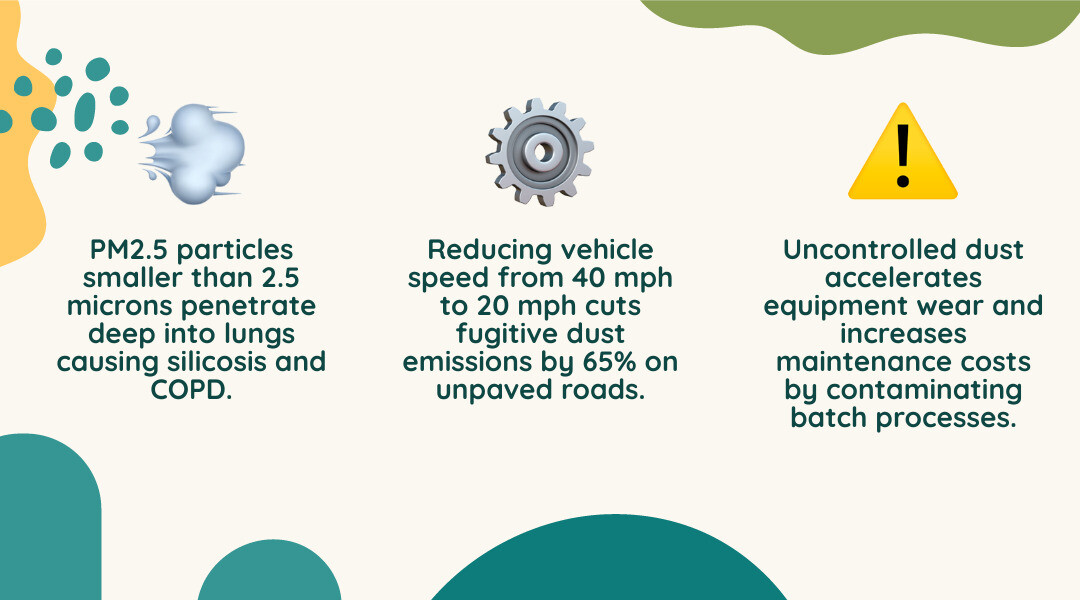
- Speed limits – Reducing vehicle speed from 40 mph to 20 mph cuts dust emissions by 65%
- Enclosures and shrouds – Contain dust during cutting, grinding, and material handling
- Automated batching controls – Reduce fugitive dust from powder and ingredient handling in process plants
Dust is more than a nuisance. Airborne particles smaller than 10 microns (PM10) and 2.5 microns (PM2.5) penetrate deep into the lungs. Long-term exposure is linked to silicosis, chronic bronchitis, COPD, and even lung cancer. There is no cure for many of these conditions.
Beyond health, uncontrolled dust causes real operational pain in process industries. It accelerates equipment wear, contaminates product batches, creates combustible dust hazards, and triggers costly regulatory violations.
For production managers in food, chemical, and industrial processing, the stakes are especially high. Dust from powder handling, ingredient batching, and bulk material transfers is not just a safety issue. It directly impacts batch accuracy, product consistency, and throughput.
Understanding which dust controls work, where they apply, and how to integrate them into your operation is the first step toward a safer, more efficient plant.
Why Effective Dust Controls are Essential for Industrial Performance
In my experience working with industrial facilities in Illinois and across the US and Canada, I’ve seen how uncontrolled dust acts like a “silent tax” on a business. If you aren’t managing your dust controls effectively, you aren’t just risking a fine; you are actively degrading your plant’s performance.
Operational Pain Points
When dust escapes into your facility, it settles on sensitive electronics, clogs motor vents, and acts as an abrasive on moving parts. This leads to premature equipment wear and frequent, unplanned maintenance. In high-precision environments like food or chemical processing, Dust Containment is Essential because fugitive dust leads to cross-contamination. If an expensive ingredient for Batch A drifts into the mixer for Batch B, you’ve just created scrap and lost money.
Regulatory Compliance and Safety
Beyond the equipment, we have to talk about the people. Organizations like OSHA, the EPA, and NIOSH have strict standards for air quality. According to Fugitive Dust Control Measures and Best Practices , fugitive dust is particulate matter that enters the atmosphere without passing through a stack or duct.
The health risks are severe. Respirable crystalline silica can cause silicosis, a permanent scarring of the lungs. Furthermore, many industrial powders are combustible. If you aren’t familiar with the question What is NFPA 652?, you should be. It is the standard on the fundamentals of combustible dust, and failing to follow its guidelines can lead to catastrophic dust explosions. Proper dust controls are your first line of defense against these life-threatening risks.
Primary Sources and Methods of Dust Controls
Dust doesn’t just appear; it’s generated by mechanical force or wind. In construction and mining, earthmoving and vehicle traffic are the primary culprits. In a manufacturing plant, it’s often the transfer of dry bulk materials.

According to the Dust Control Methods guide, there are four basic ways to manage these emissions:
- Limit the creation of dust-sized particles.
- Reduce wind speed at the ground level.
- Bind particles together.
- Capture and remove the dust.
For unpaved roads and large open sites, methods like water spraying are common but require constant reapplication. Research shows that lowering the speed of a vehicle from 45 mph to 35 mph can reduce dust emissions by up to 22 percent. If you drop that speed to 20 mph, the reduction jumps to 65%.
For more permanent surfaces, the CPS 373 – Dust Control on Unpaved Roads and Surfaces – standard suggests using gravel or chemical palliatives to stabilize the ground. Interestingly, gravel can reduce soil losses by 95 percent compared to unstabilized soils.
Mechanical Extraction and Filtration as Dust Controls
In indoor manufacturing and processing environments, we cannot simply spray water on everything. This is where Handling the Dust Problem requires mechanical intervention.
Source capture is the gold standard here. By using shrouds on tools or suction hoods at material transfer points, you capture the dust before it ever becomes “fugitive.” High-quality vacuum systems equipped with HEPA filtration are essential. These systems capture debris down to 0.3 microns, which is the threshold required to satisfy most EPA, NIOSH, and OSHA regulations.
Chemical and Physical Dust Controls for Large Areas
For large-scale outdoor operations, I often recommend a mix of physical barriers and chemical stabilizers.
- Mulch: Can reduce wind erosion by 75 to 95 percent.
- Vegetative Cover: Planting grass or shrubs in non-traffic areas reduces wind velocity at the surface.
- Windbreaks: A well-placed fence can create a deposition zone 8 to 10 feet long for every foot of vertical height.
- Chemical Suppressants: These include deliquescent salts (like calcium chloride), which absorb moisture from the air, and synthetic polymers that create a “crust” on the soil.
| Method | Effectiveness | Reapplication Frequency |
|---|---|---|
| Water Spraying | High (Initial) | Hourly/Daily |
| Chemical Treatment | 30% – 80% | Seasonal/Monthly |
| Mulching | 75% – 95% | Yearly |
| Gravel/Stone | 95% | Rare |
Optimizing Plant Performance with Automated Dust Controls
While the methods above work for roads and construction sites, my specialty lies in the “heart” of the factory: the batching and weighing systems. This is where dust controls evolve from simple suppression to high-tech automation.
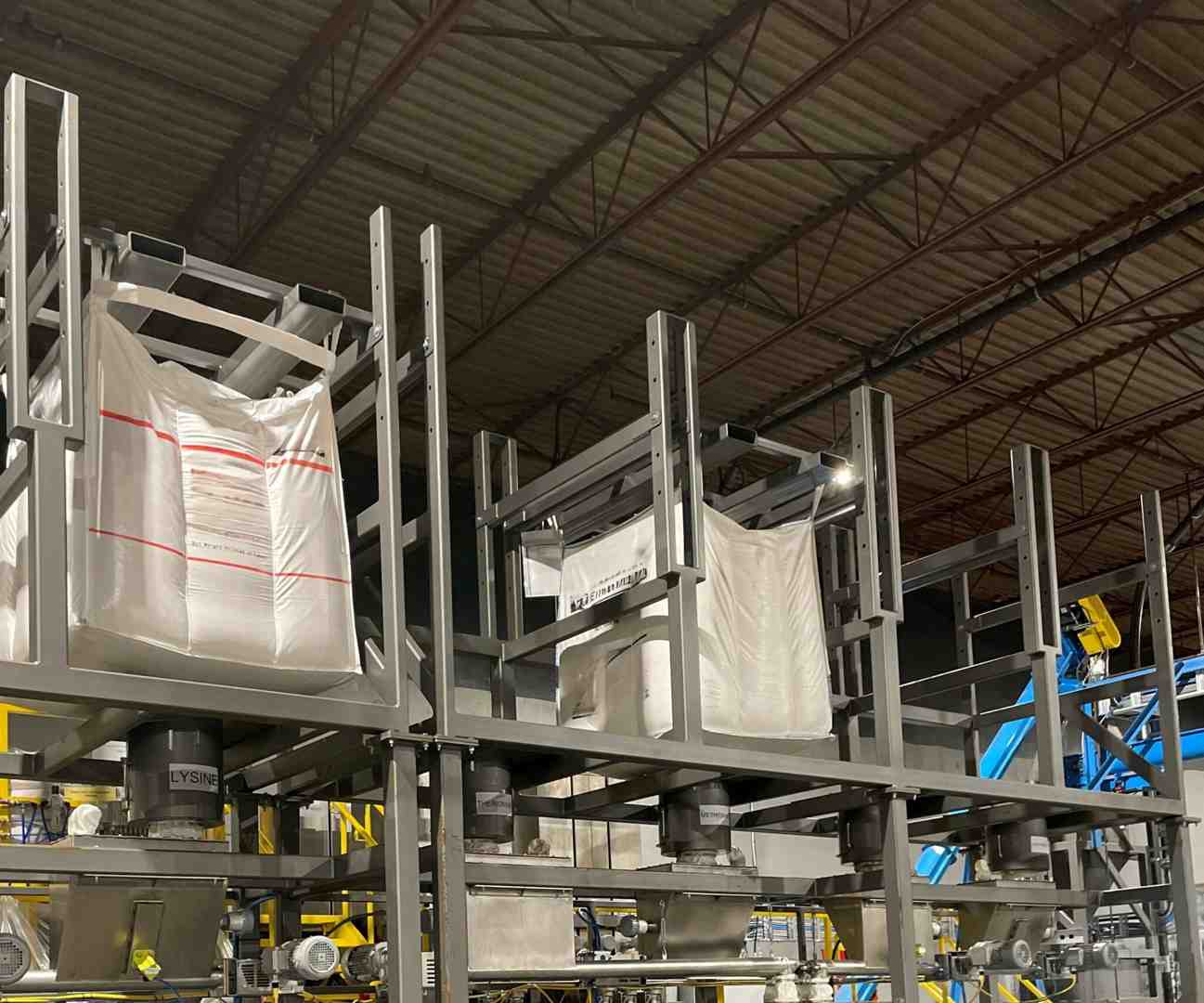
In many plants, the biggest source of dust is manual dumping. When an operator rips open a bag of powder and dumps it into a hopper, a cloud of “expensive” dust fills the air. This isn’t just a mess; it’s a loss of material. If your recipe calls for 50 lbs of an ingredient and 0.5 lbs floats away as dust, your batch is no longer accurate.
Reducing Dust in Material Handling
Dust Containment for Ingredient Batching Systems is achieved through better engineering. For example, Reducing Dust in Bulk Bag Unloader systems involves using sealed connections and “spout clamps” that prevent leaks during the discharge process. By automating these transfers, you reduce the labor dependency and the human error that leads to spills.
Integrating Automated Dust Controls into Batching Systems
When you move from manual to automated batching, you gain significant control over your environment. I often help clients decide between Loss-in-Weight and Gain-in-Weight systems.
- Loss-in-Weight: Ideal for continuous feeding, where the system measures how much material is leaving the feeder. It is highly accurate and usually fully enclosed, making it excellent for dust control.
- Gain-in-Weight: Better for large batches where ingredients are added to a central scale.
By implementing Essential Dust Control Measures for Safe and Efficient Manufacturing, you aren’t just cleaning the air; you are increasing throughput and consistency. Automated systems don’t get tired, they don’t sneeze into the batch, and they don’t leave the lid off the hopper.
Developing a Comprehensive Dust Management Plan
You can’t just throw a vacuum at the problem and hope it goes away. A professional approach requires a structured plan. Based on Engineering Controls Database – Best Practices for Dust Control in Coal Mining – Surface Mines –Controlling Haulage Road Dust , an effective plan follows these steps:
- Site Survey: Identify every point where dust is generated. Is it at the unloader? The mixer? The conveyor?
- Risk Assessment: Prioritize areas based on health risks (silica) and explosion risks (combustible dust).
- Selection of Controls: Choose the right tool for the job. You might use a windbreak for the yard but need a central vacuum system for the packaging line.
- Documentation and Training: Ensure your team knows how to operate the dust controls. A HEPA filter does nothing if it’s clogged and never changed.
- Monitoring: Use sensors to track air quality and system performance in real-time.
For many older facilities, the choice is between a retrofit or a full system upgrade. A retrofit can add dust collection to existing hoppers, while a full upgrade might involve a completely automated, sealed batching line. While a full upgrade has a higher initial cost, the long-term savings in reduced scrap, lower labor costs, and improved batch accuracy usually provide a much better ROI.
Conclusion
At Sterling Systems & Controls, we believe that the best dust controls are the ones integrated directly into your process. We provide custom-engineered automated solutions for material weighing, batching, and process control across the food, feed, and chemical industries.
By focusing on single-source, experienced solutions tailored to your specific objectives, we help you eliminate the operational pain of fugitive dust. Whether you are looking to upgrade an old manual process or design a new, state-of-the-art facility in Illinois, the US, or Canada, our goal is to improve your plant’s performance through precision and automation.
If you are ready to take control of your environment, you can find More info about dust control for powder handling on our specialized application page. Let’s make your facility cleaner, safer, and more profitable.
Frequently Asked Questions
How do dust controls improve batching accuracy?
Dust is literally “uncontrolled” material. When powder escapes as dust, it is no longer being weighed or accounted for in the final product. By using enclosed systems and vacuum extraction, you ensure that every gram of ingredient that leaves the bin ends up in the mixer. This leads to higher material retention, better weight precision, and a significant reduction in cross-contamination between different product runs.
What are the most cost-effective dust controls for unpaved roads?
The most immediate and cost-effective method is speed reduction; simply lowering vehicle speeds can cut emissions by over 60%. For a more “set it and forget it” approach, applying gravel or stone is highly effective, as it reduces soil loss by 95%. Moisture management through regular light watering is also effective, though it requires more labor than a one-time application of chemical palliatives or soil stabilizers.
Which regulations govern industrial dust controls?
In the United States and Canada, several bodies oversee dust:
- OSHA: Sets Permissible Exposure Limits (PELs) for substances like respirable crystalline silica.
- EPA: Regulates fugitive dust under the Clean Air Act to protect outdoor air quality and waterbodies.
- NFPA: Standard 652 provides the framework for managing combustible dust hazards to prevent explosions.
- NIOSH: Provides research-based recommendations and best practices for worker safety and engineering controls.