
Automation Software Upgrade
What is FreshStart™?
FreshStart™ is a technology program for automation software upgrades designed specifically for your Sterling Systems & Controls, Inc. legacy PC-based software. Do you have automation software applications including batching, mixing, grinding and much more, designed for and operating on MS-DOS, Windows XP, Windows 7, and Windows 8/8.1? Your company or industry does not matter. If you currently use the state-of-the-art Microsoft .Net-based software applications from Sterling Systems & Controls, great! If not, and you currently use our legacy PC-based software, the FreshStart technology upgrade is for you!
Extend Life, Add Capability, Reduce Risk
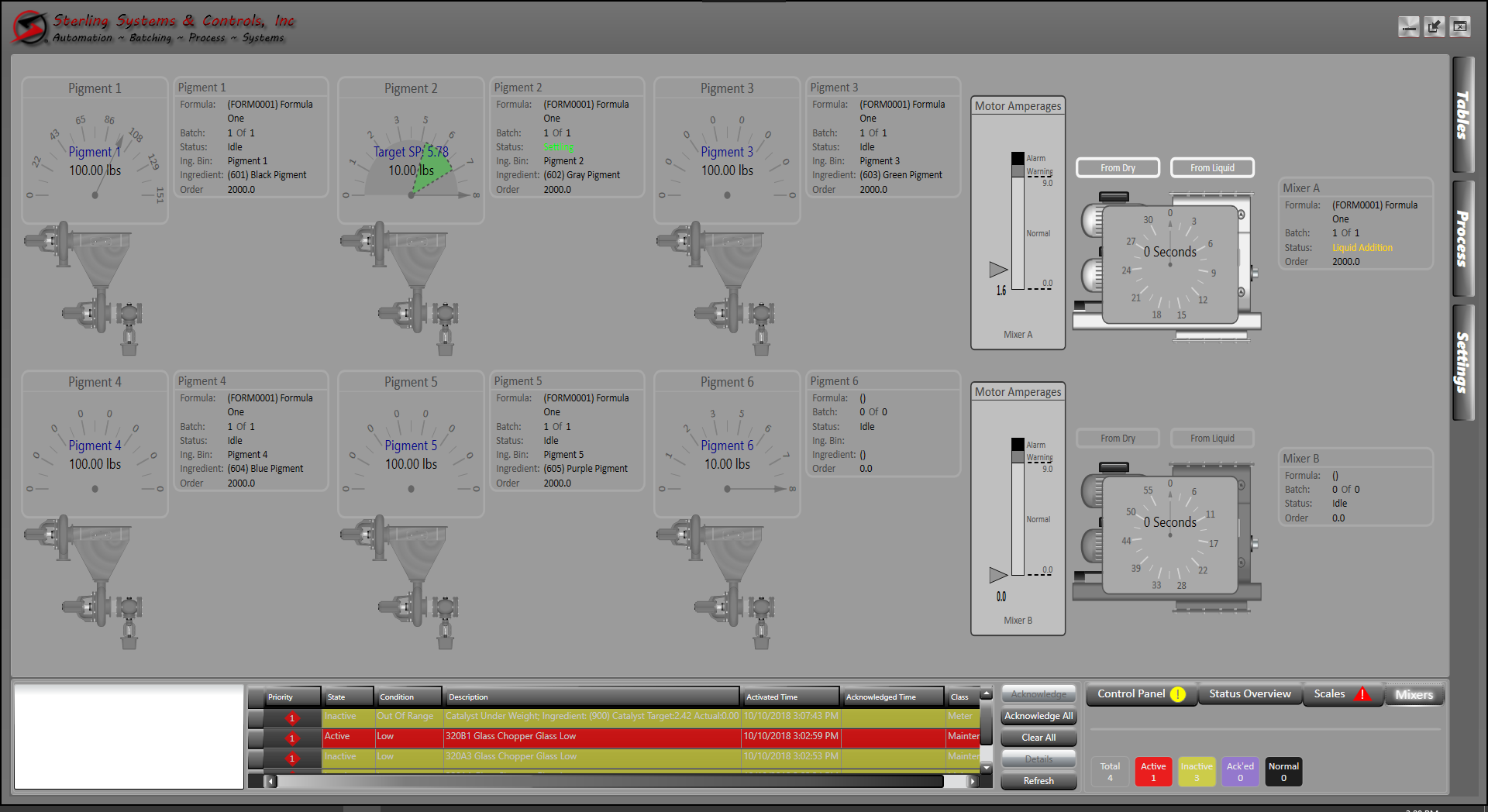
Reasons for Automation Software Upgrade
Controls age fast. Sterling’s Automation Software Upgrade modernizes your PLC/HMI/SCADA layer so production stays secure, supportable, and efficient—without a rip-and-replace. We migrate logic and graphics, clean up alarms, harden networks, and preserve your historical data and recipes.
What This Upgrade Solves
- Obsolescence: legacy runtimes, unpatchable OS/HMIs, discontinued PLC platforms
- Security gaps: outdated firmware, weak user/role models, flat networks
- Downtime risk: nuisance alarms, unstable code, no disaster-recovery plan
- Data silos: reports trapped on a single node; no SQL/centralized history
What We Deliver
- Current PLC/HMI/SCADA software and firmware baselines
- Rationalized alarms & messaging (ISA-style priorities, clearer operator guidance)
- Recipe & SQL migration with audit-ready batch/lot records
- Cyber hardening (user roles, patch paths, backups, network segmentation guidance)
- Operator/maintenance training and full documentation
Typical Scope
- PLC application review & cleanup (naming, comments, sequencing)
- HMI/SCADA modernization (graphics, navigation, security, thin client options)
- Historian/SQL upgrade (retention policies, reports, dashboards)
- Alarm rationalization (shelving, suppression, priorities, KPIs)
- Disaster recovery (image/backups, restore tests)
- Cutover plan (offline simulation, phased validation, go-live support)
Compatible with Your Reality
Allen-Bradley/Logix, Siemens, and mixed-vendor plants; Windows-based HMIs; existing networks (pneumatic/mechanical interlocks kept intact); integrates cleanly with batching, weighing, and plant MES/ERP.
Need to upgrade without downtime surprises? Request a quick application review—we’ll baseline your controls, outline risks, and propose an upgrade path that fits your maintenance window and budget.
Frequently Asked Questions
What is an automation software upgrade?
An automation software upgrade is the process of updating or replacing legacy batch and process control software with modern applications that improve reliability, data visibility, and integration with PLC/HMI systems. Upgrades focus on performance, security, and maintainability without changing underlying process logic unless required.
Why should I consider upgrading my automation software?
Upgrading improves system stability, reduces downtime risk, enhances operator interfaces, increases data accessibility for reporting and analytics, and aligns control systems with current technology standards. It enables better tracking of production, recipes, events, and alarms.
Can an automation software upgrade work with existing hardware?
Yes. Sterling engineers assess current PLCs, I/O, and network infrastructure to determine where software improvements can be made without unnecessary hardware replacement. When hardware do need updating, the solution is scoped to balance performance, cost, and future support.
How does Sterling perform an automation software upgrade on existing systems?
Sterling’s approach begins with assessment and documentation of existing controls, followed by software design that meets current production requirements. Updated code is tested offline, installed on site, and commissioned with operator training and validation of batch and process control functions.
What benefits do upgraded control systems provide for data and reporting?
Upgraded automation software improves production data capture, event logs, recipe tracking, audit trails, and connectivity to historian or plant reporting systems. This enables better decision-making, traceability, and compliance with internal and external reporting requirements.