
How to Choose the Best Grain Data Management System
Why a Grain Data Management System Matters
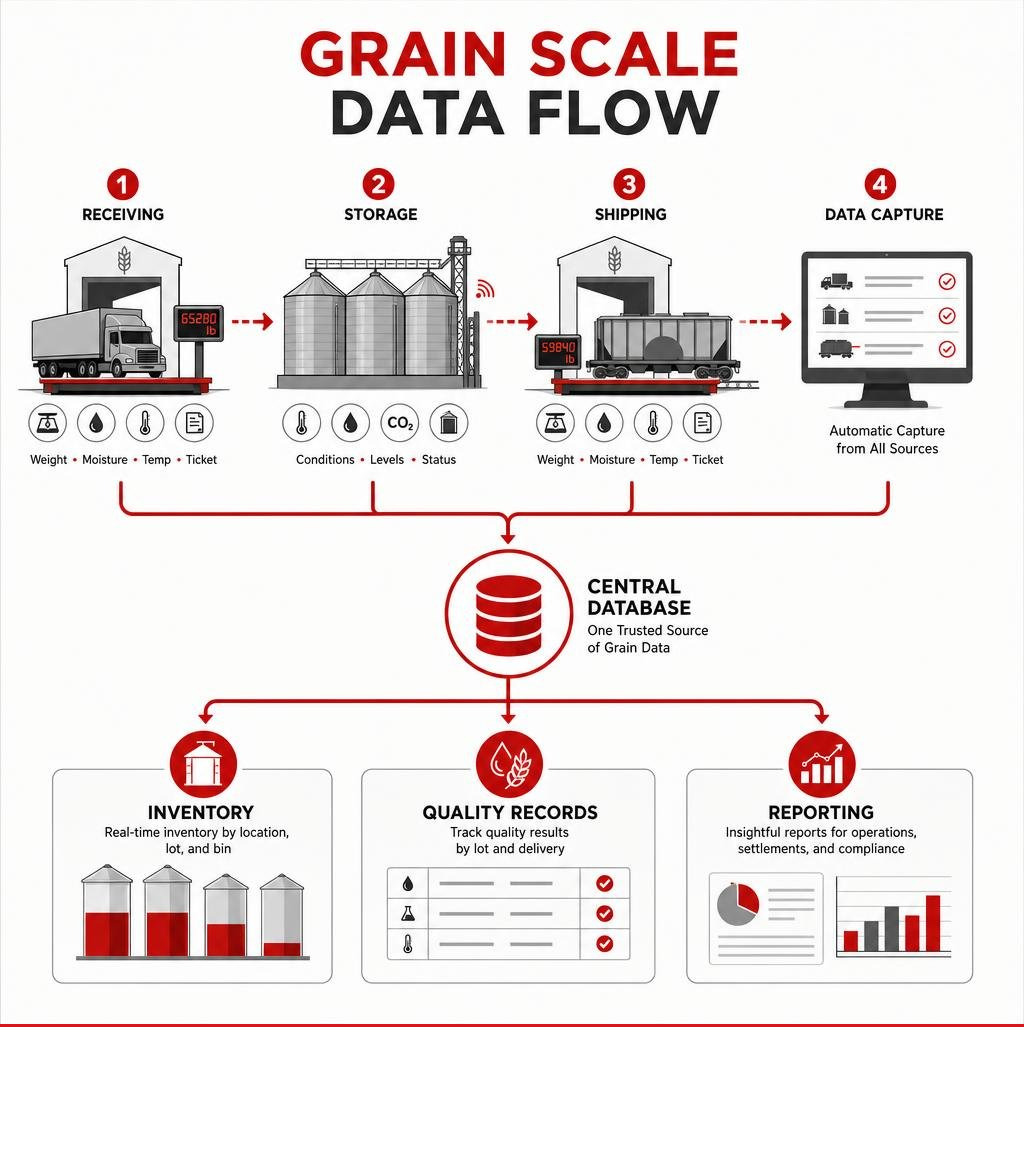
A grain data management system brings scale weights, moisture readings, storage conditions, inventory, and transaction records into one reliable workflow. To manage grain scale data well, connect truck and rail scales, moisture meters, and ticketing systems directly to a central database, then use that data to reconcile inventory, contracts, and shipments without re-entering information by hand.
For a modern grain operation, this is more than better recordkeeping. Accurate, timely data helps teams:
- Create scale tickets automatically at receiving and shipping
- Match weights and quality results to lots, bins, contracts, and customers
- Track temperature, moisture, and CO2 risks before stored grain loses value
- Give managers one view of inventory across sites
- Build audit-ready records for settlements, quality claims, and compliance
The right system depends on the operation. A small farm may need dependable cart-scale records and simple bin monitoring. A commercial elevator, terminal, or processing facility may need unattended scale terminals, moisture-meter interfaces, automated ticketing, PLC and SCADA connections, and integration with accounting or ERP software. The key is choosing a platform that turns physical grain movement into usable operational data.
At Sterling Systems & Controls, our engineering team brings more than 22 years of manufacturing leadership experience improving weighing, batching, and process-control operations. In this guide, we will compare the practical capabilities to look for in a grain data management system, from basic monitoring to integrated industrial automation.
Relevant articles related to grain data management system:
Core Capabilities of a Grain Data Management System
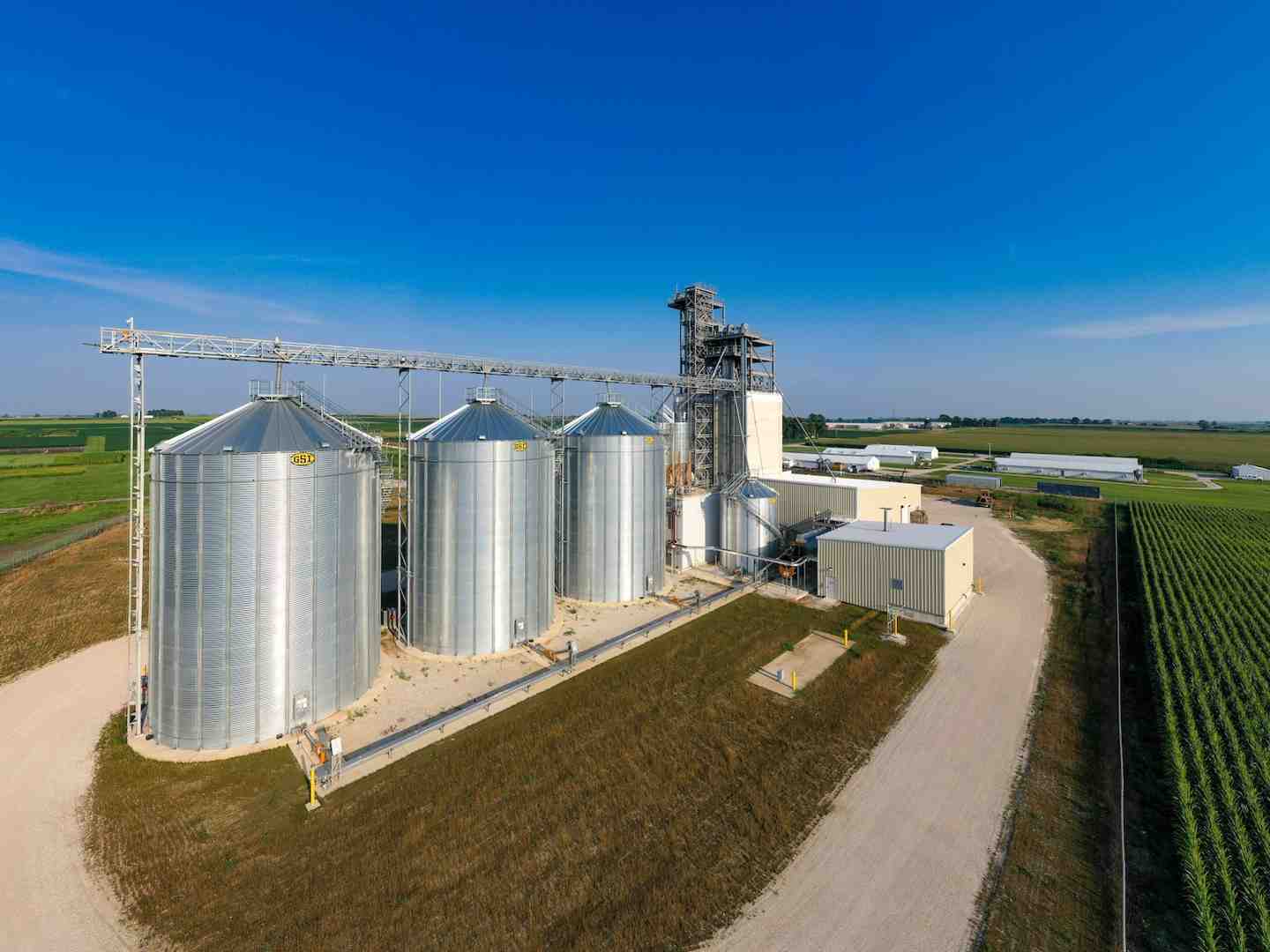
When I evaluate a data architecture for bulk material facilities, I look at how effectively the platform eliminates manual intervention between physical handling and digital ledgers. A complete software stack must capture physical load metrics, maintain accurate inventory balances, calculate environmental equilibrium, and reconcile financial agreements seamlessly.
Managing inventory across multiple upright silos or flat storage buildings requires continuous synchronization. Platforms that incorporate tools like the University of Illinois farmdoc grain inventory management tools give operators a reliable framework for calculating capacity constraints, shrink factors, and localized basis risk.
Modern systems must also track legal contracts, such as spot purchases, delayed price agreements, and basis contracts. When physical scale tickets automatically tie into contract fulfillment queues, settlement errors drop significantly. This structural integrity forms the foundation for audit-ready compliance reporting across commercial facilities.
Tiered Grain Storage Monitoring and Environmental Sensing
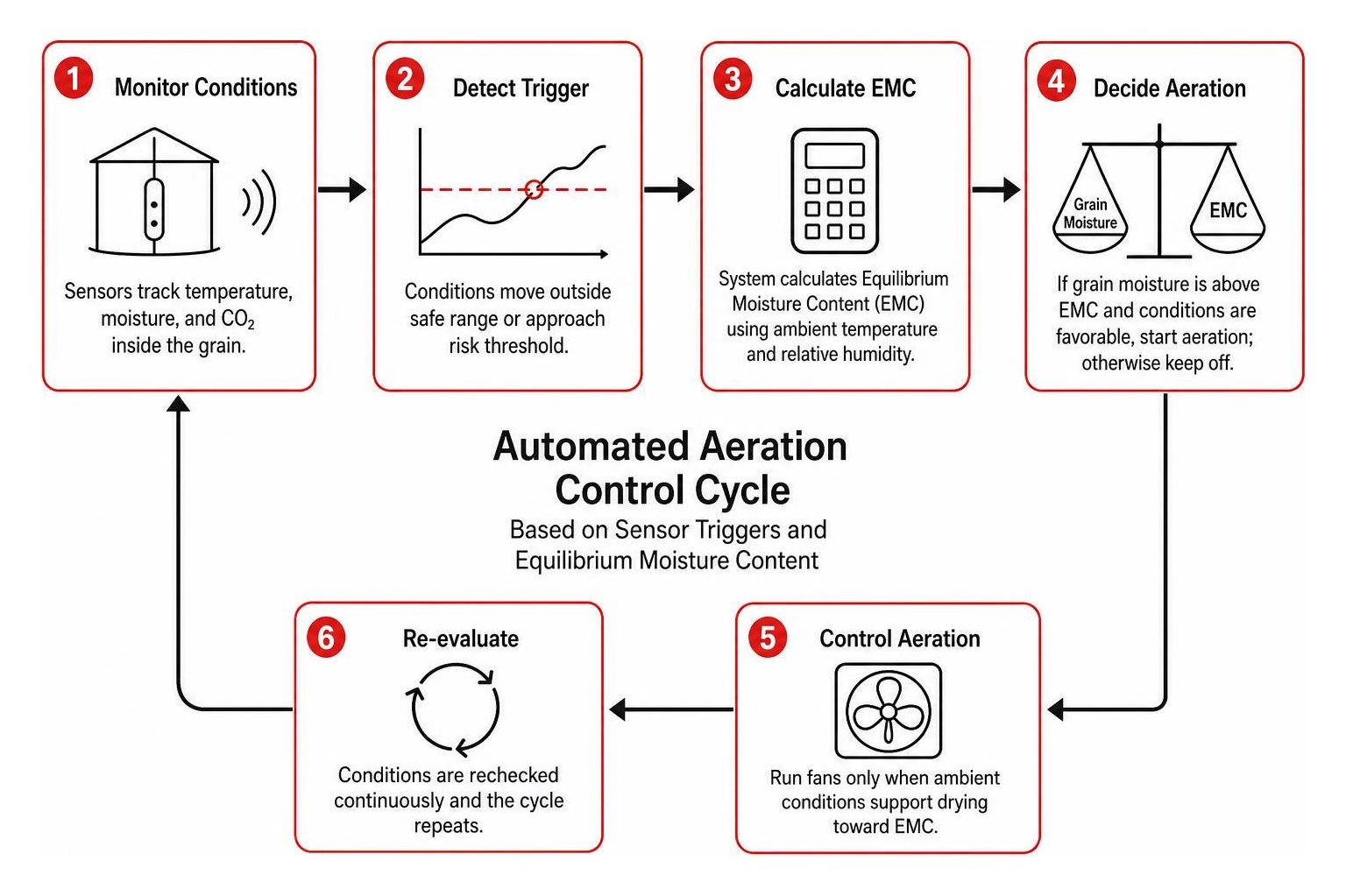
Preserving post-harvest crop quality requires continuous visibility into internal bin conditions. Modern sensor networks deploy vertical cables tracking temperature and moisture profiles throughout the grain mass. Measuring carbon dioxide levels alongside thermal trends is critical because rising gas concentrations indicate biological activity, insect propagation, or early mold development long before localized hot spots register on standard thermal cables.
By cross-referencing bin conditions against regional market baselines like the USDA Feed Grains Database, operators make informed conditioning decisions. Automated aeration controls run aeration fans only when ambient relative humidity and temperature match the targeted Equilibrium Moisture Content. This closed-loop aeration strategy prevents unintended over-drying, preserving salable mass and maximizing commodity value.
In-Field Harvest Weighing and Scale-House Telemetry
Data management begins at the point of harvest. Equipping grain cart scales with digital load cells and wireless Bluetooth transmitters allows harvest teams to stream real-time weight records directly to in-cab tablet displays. This real-time visibility enables operators to calibrate combine yield monitors on the fly and prevents road trucks from exceeding legal highway axle limits.
Integrating in-field scale hardware directly with overall grain handling automation creates an uninterrupted audit trail from the combine hopper directly to the receiving pit.
Selecting the Right Grain Data Management System for Your Operation
Selecting the right platform requires balancing operational scale, site throughput, and technical requirements.
| Feature / Tier | Basic On-Site Monitoring | Remote Cloud Telemetry | Industrial Automated Systems |
|---|---|---|---|
| Primary Target | Individual growers & single-bin sites | Multi-location farms & co-ops | Commercial elevators & feed mills |
| Data Collection | Manual readouts / localized logs | Wireless IoT & cellular gateways | Direct PLC / SCADA & sensor buses |
| Inventory Tracking | Static spreadsheets or basic apps | Cloud dashboards with mobile sync | Real-time multi-bin balance tracking |
| Aeration Control | Manual switch operation | Remote start/stop via mobile app | Fully automated closed-loop control |
| Scale Integration | Standalone cart scale indicators | Bluetooth scale-head data sync | Unattended RFID ticketing terminals |
| System Focus | Entry-level crop protection | Remote multi-site visibility | Enterprise control & process automation |
Entry-level tools work well for smaller operations focused on baseline monitoring. However, commercial operations managing high daily throughput require industrial-grade platforms that unify automation hardware, quality instrumentation, and enterprise networks.
Implementing Industrial Scale Data Integration and Process Control
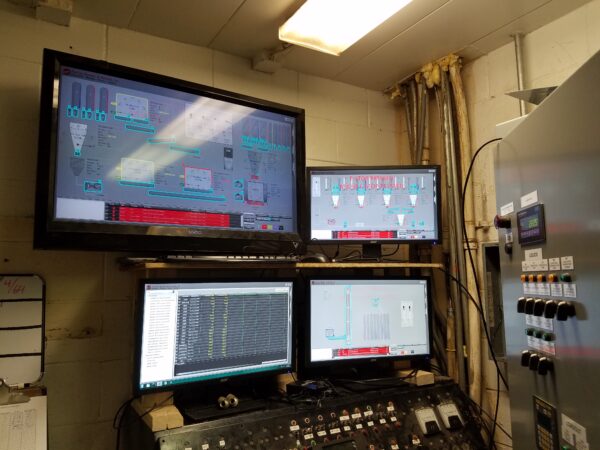
High-volume commercial processing facilities require deep integration between hardware controllers and operational databases. A standalone software interface cannot prevent bottlenecks if it does not communicate directly with physical plant equipment. Implementing robust grain terminal control systems ensures that material routing gates, bucket elevators, hazard monitors, and distributors operate in lockstep with scale-house transactions.
Automated Scale Interfacing and Transaction Reconciliation
Scale-house bottlenecks during peak harvest can stall entire receiving operations. Modern industrial facilities utilize unattended scale terminals equipped with long-range RFID scanners, optical license plate recognition, and integrated traffic lights.
When a truck pulls onto the scale deck, the system reads the vehicle tag, pulls the associated split-contract records, and automatically captures gross weights from the load cells while polling moisture analyzers and test-weight meters.
This automated transaction workflow generates digital tickets instantly, assigning precise grain grades and deductions without manual keyboard entry. The system updates inventory allocations in real time, applies mark-to-market valuations, and maintains continuous audit logs to eliminate end-of-month settlement disputes.
Enterprise Integration for a Grain Data Management System
To maximize operational visibility, scale and storage data must connect cleanly with business enterprise platforms. High-speed MQTT pipelines and industrial message brokers stream granular sensor metrics and scale transactions from edge hardware directly into centralized accounting and trade management engines.
Establishing verified data integration methods connecting batch control systems to enterprise resource planning ensures that receiving metrics update general ledgers without manual export routines.
This seamless data exchange helps facilities align their operational logging with regional governance standards, including the Canadian Grain Commission data governance standards. With automated position ledgers synchronized across physical bins and financial trading desks, commercial managers can track physical grain positions against paper market hedges in real time.
On-Premise Control Architecture Versus Cloud Telemetry
When designing an automation architecture, choosing between cloud-based platforms and on-premise industrial control is a critical decision. While cloud dashboards provide convenient multi-site visibility, critical process manufacturing facilities cannot afford operational downtime caused by rural internet interruptions or external cloud latency.
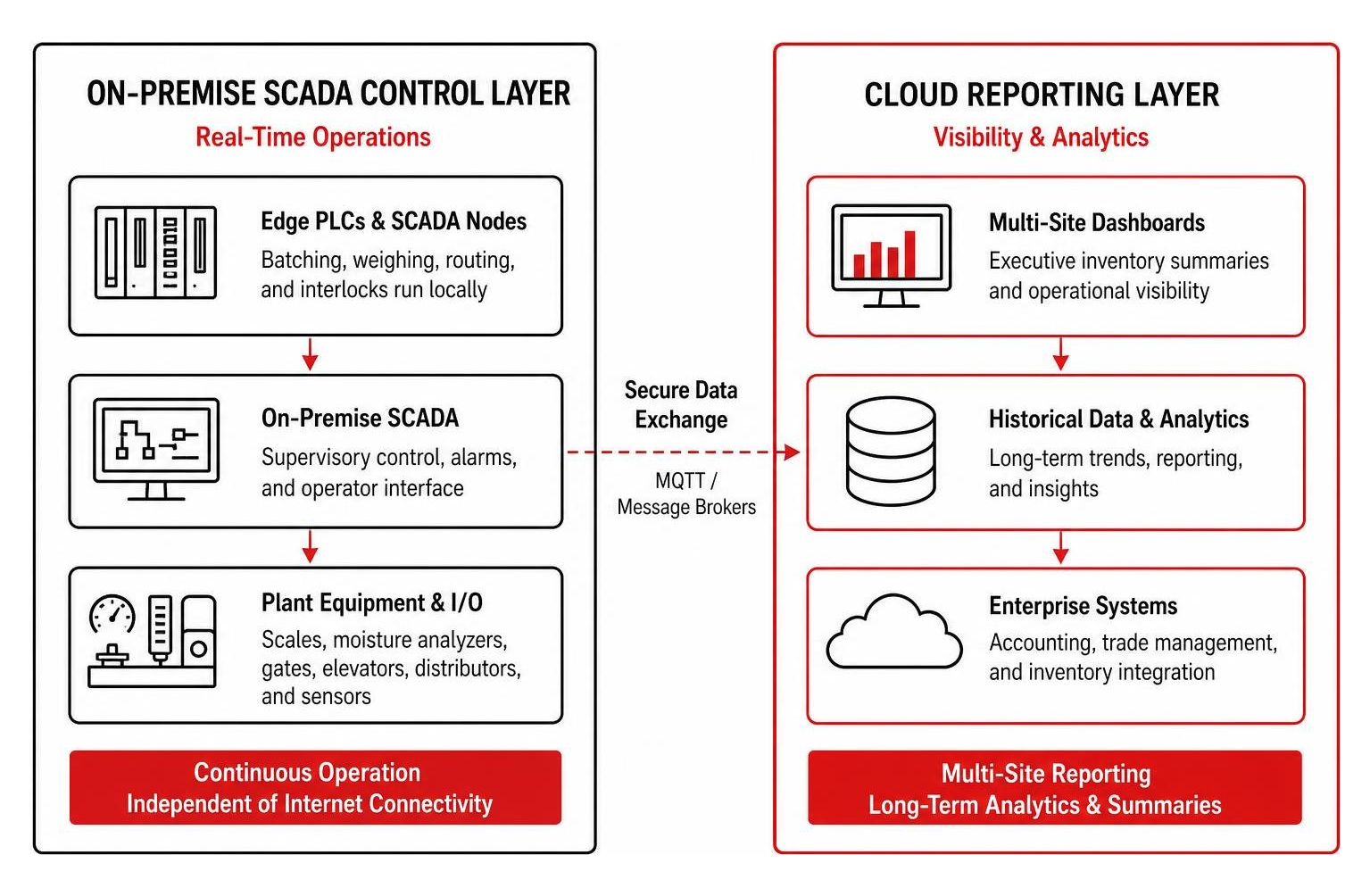
At Sterling Systems & Controls, we design robust on-premise architectures powered by industrial supervisory control software. By running mission-critical batching, weighing, and routing logic locally on edge industrial PLCs and SCADA nodes, the plant maintains continuous operational uptime and strict cybersecurity isolation. Cloud connections are utilized where they add the most value: for multi-site reporting, long-term analytics, and executive inventory summaries.
For processing facilities combining grain receiving with downstream processing, deploying custom feed mill automation bridges the gap between raw grain inventory and finished feed production. By partnering with an experienced single-source engineering team, you ensure your scale systems, process controls, and business databases work together as a cohesive data management infrastructure.