
Bulk Bag Unloading Systems
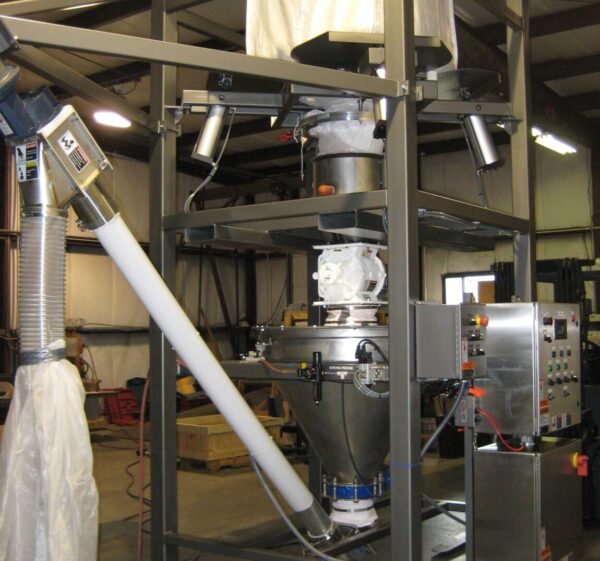
Bulk bag unloading systems are used to safely and efficiently discharge dry bulk materials from flexible intermediate bulk containers (FIBCs) into downstream processing or conveying equipment. Sterling Systems & Controls designs and integrates bulk bag unloading systems that support controlled material flow, reduced manual handling, and cleaner operating environments.
These systems are commonly used in food processing, chemical manufacturing, plastics, mineral processing, and agricultural applications where materials must be unloaded from bulk bags and transferred into batching, conveying, or storage systems. Sterling’s bulk bag unloading solutions are designed to function as standalone material handling systems or as part of a larger bulk bag handling systems architecture.
Facilities implementing bulk bag unloading systems often seek to improve material containment, minimize dust exposure, and maintain consistent flow into downstream processes. Sterling focuses on system designs that balance safety, reliability, and integration flexibility.
What a Bulk Bag Unloading System Can Include
- Bulk bag unloading systems are configured based on material characteristics, flow behavior, and downstream process requirements. A system may integrate:
- Bulk bag unloaders with frame or hoist-based designs
- Bag spout access and secure discharge interfaces
- Flow aids such as massage paddles, vibration, or agitation
- Dust containment and collection interfaces
- Bag support and handling features
- Controls and operator interfaces for unloading operations
- Integration with downstream conveying, batching, or storage equipment
- These systems are frequently paired with batching systems and downstream conveying equipment to support consistent material transfer.
Automation, Integration & Controls
Sterling bulk bag unloading systems can incorporate automation and controls that manage material discharge, flow consistency, and operator interaction. Systems may be integrated with existing equipment or connected into broader material handling workflows through Sterling’s controls and automation capabilities.
Automation can support controlled discharge rates, interlocks with downstream equipment, and sequencing logic that helps prevent overfeeding or material buildup. This approach improves process reliability while reducing operator intervention.
Bulk bag unloading systems are often integrated with upstream storage or downstream bulk bag filling systems to support end-to-end bulk material handling within a facility.
Design, Integration & Lifecycle Support
Sterling supports bulk bag unloading projects from early application evaluation through system commissioning. Support can include system design, controls development, integration with existing equipment, start-up assistance, and operator training.
By managing system integration and controls under a single scope, Sterling helps ensure that bulk bag unloading systems operate reliably within the broader production environment.
Frequently Asked Questions
What is a bulk bag unloading system?
A bulk bag unloading system is engineered equipment that safely supports, conditions, and discharges material from a bulk bag into a downstream process or storage system, using features such as dust containment, scale integration, and controlled flow to maintain accuracy and safety.
How does Sterling’s bulk bag unloading equipment improve material handling?
Sterling’s systems improve material handling by controlling dust emissions, stabilizing bag support, metering discharge, and integrating weigh scales or feeders to ensure accurate transfer of bulk solids into conveyors, hoppers, or batching systems.
Can bulk bag unloading systems be integrated with automation and controls?
Yes. Sterling designs bulk bag unloading systems to integrate with PLC/HMI or SCADA controls, weigh batching logic, and plant automation so that unloading events, weights, alarms, and material statuses can feed into a broader process control network.
What industries typically use bulk bag unloading systems?
Industries using bulk bag unloading include animal feed, baking and food processing, pet food, chemicals, plastics compounding, and other industrial processes where dry bulk solids are handled and require controlled discharge.
What options are available for dust control and containment?
Sterling’s bulk bag unloaders can include dust containment features such as enclosures, filters, negative-pressure ventilation, and connection points for existing plant dust collection systems to minimize fugitive material and improve workplace safety.