
Bulk Bag Filling Systems
Bulk bag filling systems are used to accurately and safely fill flexible intermediate bulk containers (FIBCs) with dry bulk materials in industrial processing environments. Sterling Systems & Controls designs and integrates bulk bag filling systems that support controlled material flow, reliable weight accuracy, and clean operating conditions while allowing facilities to scale production efficiently.
These systems are commonly used in food, chemical, mineral, plastics, and agricultural applications where materials are transferred from upstream processes into bulk bags for storage, transport, or shipment. Sterling’s bulk bag filling solutions are engineered to function as standalone material handling systems or as part of a larger automated process.
Facilities implementing bulk bag filling systems often seek improved consistency, reduced manual handling, and better dust containment. Sterling focuses on system designs that balance throughput, accuracy, and operator safety while integrating seamlessly with upstream equipment.
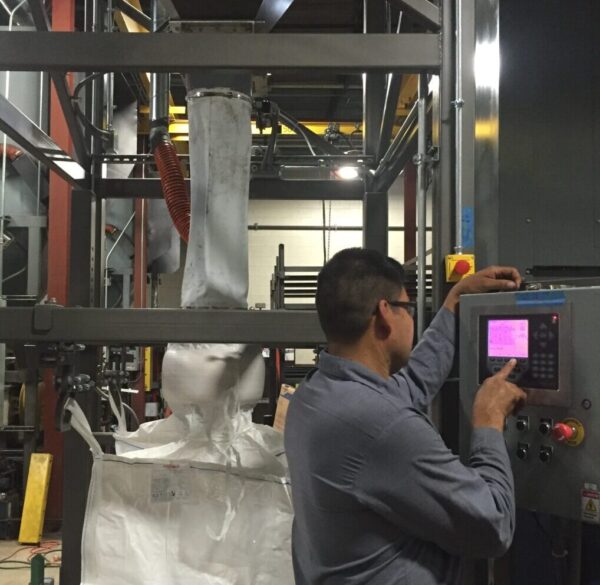
What a Bulk Bag Filling System Can Include
Bulk bag filling systems are configured based on material characteristics, throughput requirements, and facility layout. A system may integrate:
- Bulk bag filling stations with single- or multi-point filling
- Weighing and batching controls for accurate bag weights
- Bag inflation and tensioning mechanisms
- Dust containment and collection interfaces
- Manual or automated bag handling features
- Controls and operator interfaces for filling operations
- Integration with upstream conveying, storage, or batching equipment
These systems are commonly paired with upstream batching systems and downstream material handling processes to support consistent production flow.
Automation, Integration & Controls
Sterling bulk bag filling systems can be supplied with automation and controls that coordinate material flow, weighing accuracy, and operator interaction. Systems can be designed to interface with existing process equipment or integrated into broader material handling architectures through Sterling’s controls and automation capabilities.
Where required, automation can support recipe-based batching, controlled fill rates, and repeatable sequencing to reduce variability and operator dependency. This approach helps facilities maintain consistent fill weights while improving throughput and reducing rework.
Bulk bag filling systems can also be integrated into larger bulk bag handling systems to support unloading, conditioning, and material transfer within the same facility.
Design, Integration & Lifecycle Support
Sterling supports bulk bag filling projects from early application review through system commissioning. Support can include system design, controls development, integration with existing equipment, start-up assistance, and operator training.
By providing system integration and controls under one scope, Sterling helps reduce coordination challenges and ensures that bulk bag filling systems operate reliably within the broader production environment.
Frequently Asked Questions
What materials are commonly handled by bulk bag filling systems?
Bulk bag filling systems are used for powders, granules, pellets, and other dry bulk materials commonly found in food processing, chemical, plastics, mineral, and agricultural applications.
How do bulk bag filling systems control fill weight accuracy?
Fill accuracy is controlled using integrated weighing systems and batching controls that monitor material flow and stop filling once the target weight is reached.
Can bulk bag filling systems integrate with existing equipment?
Yes. Bulk bag filling systems can be integrated with existing upstream conveyors, hoppers, or batching systems to fit within current process layouts.
Do bulk bag filling systems help reduce dust during filling?
Yes. Systems can include dust containment features and interfaces to dust collection equipment to help maintain cleaner operating conditions during filling.
Does Sterling provide support after installation?
Sterling provides commissioning support, operator training, and ongoing technical assistance to help facilities maintain reliable bulk bag filling operations.