
Bearing Condition Monitor
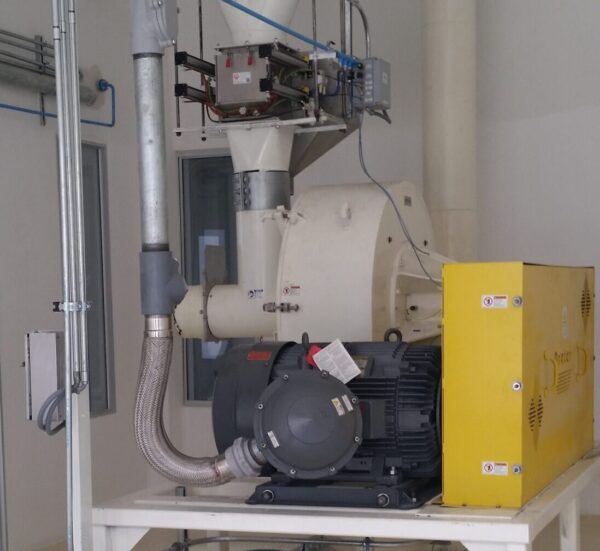
The particle size reduction process utilizes equipment known as grinders and classifiers, along with other types of milling machines. These milling machines reduce the particle size of dry solids, such as grain and other granular materials, to a size required for further processing. These devices are rotating machinery and use bearings for proper and efficient operation. Therefore, a bearing condition monitor is advantageous to detect premature wear and failure of the machine. Sterling Systems & Controls, Inc. designs and manufactures bearing condition monitor systems of the highest quality for use with the Prater Industries and other brands of high-speed mills or classifiers. Various standard and optional features are available, including a choice of intrinsically safe bearing sensors for hazardous areas. Intrinsically safe sensors are intended for use in the following hazardous areas:
- Class I, Div. 1, Groups A, B, C and D.
- Class II, Div. 1, Groups E, F and G.
- Class III, Div. 1.
- Ex ia IIC T4 Ga.
- Ex II 1 G.
- Class I Zone 0 AEx/Ex ia IIC T4 Ta = -50°C to 120°C.
Bearing condition monitor systems can be standalone or integrated into a more comprehensive control and automation system. The Control Panel for the Standalone systems is a NEMA4X fiberglass enclosure with a front door window kit.
The standalone system includes:
- Intrinsically Safe Barriers (if applicable) for accelerometer and temperature sensor outputs.
- Digital Display Relay Modules & Display Controllers.
- Clearly labeled and secure screw-type terminals for all external connections.
The integrated systems are custom-engineered and manufactured based on the overall control and automation system required for the process that it is integrated into.
Typical Features
- Intrinsically Safe or Non-Hazardous Designs.
- Standalone or Integrated Monitoring.
- Monitors Vibration, Acceleration and Temperature (°F or °C).
- One, Two or Three Bearing Standalone Packages Available.
- Programmable LCD Display and 4-20mA Outputs with Standalone Mill Monitor Systems.
- Relay Output for Warning, Relay Output for Shutdown.
- NEMA4X Wall Mounted Enclosure.
- Accelerometers with Integral Temperature Sensing.
- 100ft, 200ft or 300ft Long Cables for Sensors.
- 120VAC or 24VDC Power for Control Panel.
Benefits of Bearing Condition Monitor Systems
- Detects and Warns Before a Shutdown Condition When Vibration or Temperature Values are Abnormal.
- Can Eliminate Major Damage by Stopping Equipment Automatically.
- Data Trending Ready.
Frequently Asked Questions
What is a bearing condition monitor?
A bearing condition monitor is a sensor-based device or system that tracks vibration, temperature, or other signals from bearings on rotating equipment to indicate wear, imbalance, looseness, or developing faults before they cause failure.
Why is bearing condition monitoring important for industrial equipment?
Monitoring bearings helps detect early signs of wear or failure, enabling predictive maintenance that reduces unplanned downtime, extends equipment life, and improves safety and reliability of conveyors, mixers, fans, presses, and other rotating assets.
How does Sterling’s bearing condition monitoring integrate with control systems?
Sterling can integrate bearing condition monitors with automation systems so that vibration and temperature data are visible in PLC/HMI or supervisory software, triggering alarms, trends, and maintenance alerts through plant controls.
What types of data do bearing condition monitors provide?
These monitors provide trends in vibration amplitude/frequency, bearing temperature data, and status flags for thresholds, enabling technicians and operators to judge health and schedule maintenance.
Can bearing condition monitoring be part of a preventative maintenance strategy?
Yes. When incorporated into a preventative maintenance program, bearing condition monitoring provides data that helps schedule service or part replacement before catastrophic failure, reducing maintenance costs and stoppages.