
Micro Weighing & Ingredient Batching Systems
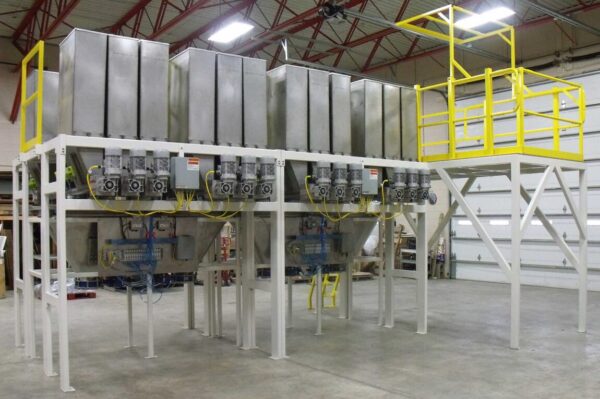
Accurate to the gram. Scalable. Built for your production needs.
When your recipe or formula demands extreme precision, even small dosage errors can disrupt quality, waste ingredients, and drive up costs. Sterling’s Micro Weighing Systems deliver modular, expandable ingredient batching solutions engineered for ±0.1 g (or your specific tolerance) performance. Whether in food, feed, biotech or specialty chemicals, we help you scale consistently with confidence.
Industry & Application Challenges
Common Pain Points in Micro Batching
- “Need compliance (food grade, sanitary, dust control) and automation controls built in.”
- “Ingredient imprecision causes product rejects or quality drift.”
- “You’re handling many low‑volume ingredients — managing them manually is error-prone.”
- “Downtime or rework due to scaling changes or system inflexibility.”
- “Difficulty integrating new ingredients or expanding existing systems.”
Our Solution: Micro Weighing Systems
Key Capabilities & Features
- Modular design for scalability — start with as few as 6 bins, expand to 48+ as needed
- Multiple feeder technologies — screw/auger, vibratory feeders (selected per application)
- Food-grade and standard-duty options for handling your ingredient types
- High resolution & accuracy — able to precisely meter and deliver micro‑amounts
- Automatic bin refill & material handling — bulk bag or tote unloading, conveyors, pneumatic or mechanical conveyance
- Dust control, safety, and sanitary design — built into the system
- Robust controls & automation — ability to update logic, integrate with MES/ERP or plant SCADA
- Flexible expansion path — you can add bins, upgrade feeders, or change control logic as needs evolve
Benefits & Value You’ll Gain
- Reduce ingredient waste & over‑dosing
- Improve product consistency and reduce rejects
- Lower labor costs — automation vs manual batching
- Future‑proof your plant — scalable and upgradeable
- Faster formula changes and agility to respond to new product lines
- Full plant integration reduces data silos & improves traceability
Use Cases / Industries
- Animal feed & pet food
- Food processing & baking
- Specialty chemicals/additives
- Pharmaceuticals/nutraceuticals
- Rubber, plastics, and industrial compounds
Sterling has designed micro weighing systems for a variety of materials, including spices, enzymes, flavors, chemicals, and other additives.
FAQs
Q: What is considered “micro” in micro weighing?
A: We generally consider ingredients up to ~50 lb (23 kg) as micro weighments, though the term may vary by industry.
Q: Can I expand the system later if I need more bins or ingredients?
A: Yes — our systems are modular and designed to scale. Customers often start small and expand later.
Q: How is accuracy maintained when using multiple feeder types?
A: We apply material‐specific calibration, feedback loops, and control logic to balance speed vs precision.
Q: How do you handle dust control or sanitary requirements?
A: Our designs incorporate dust collection, sealed hoppers, sanitary finishes, and compliance to industry standards.
Q: What level of automation/control integration is available?
A: Systems come standard with PLC control, and we integrate with SCADA, MES, or ERP systems as needed.
Why Sterling Systems & Controls
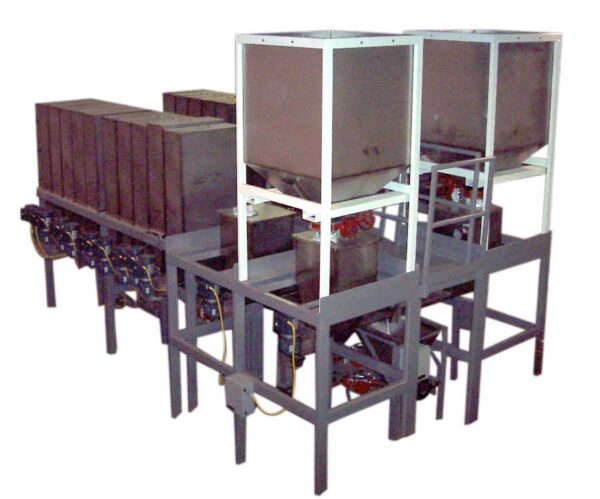
Sterling Systems & Controls designs and builds custom micro ingredient weighing and batching systems for industries across North America — including animal feed, food processing, baking, pet food, and specialty chemical manufacturing. These modular systems typically include scale-integrated components such as hoppers, platforms, conveyors, and feeders, with each configuration tailored to your space, accuracy, and batching rate requirements.
Batch transfer to downstream processes like mixers or blenders can be fully automated using mechanical or pneumatic conveying, or handled manually depending on your operation.
Each system is designed to scale as your production grows, typically starting with 6 to 48 ingredient bins and often expanding over time. Controls and automation are also easily upgradable, supporting long-term ROI and operational flexibility.