
Engineering Services for Seed
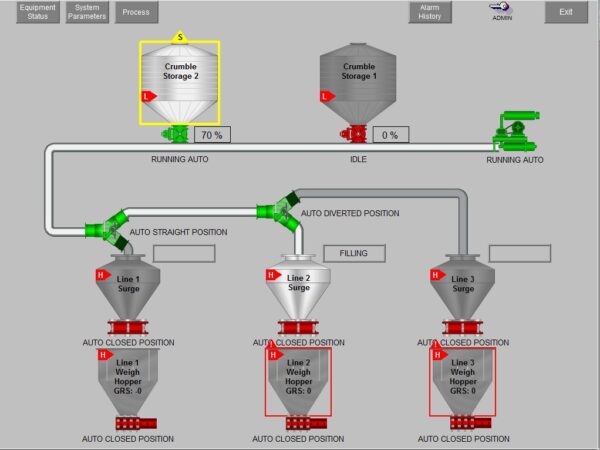
Engineering seed production and processing involves precise material handling, controlled blending, and accurate formulation to achieve high-quality seed products at scale. Sterling Systems & Controls supports agricultural seed facilities with automation, batching, controls, and material handling solutions designed to improve operational consistency, process accuracy, and production visibility.
Seed processing environments often include dry bulk materials such as grains, coatings, inoculants, and conditioning additives that must be metered, weighed, mixed, and routed efficiently through cleaning, treatment, and packaging. Sterling’s automation and system integration capabilities help agricultural producers manage these processes with repeatable performance while maintaining traceability, product quality, and regulatory compliance.
Sterling’s solutions extend from material batching, weighing, and controls to integration with dryers, conveyors, and packaging systems. By coordinating these technologies, facilities can reduce manual effort, minimize variability, and improve throughput across seed processing workflows.
WebCentralTM Software
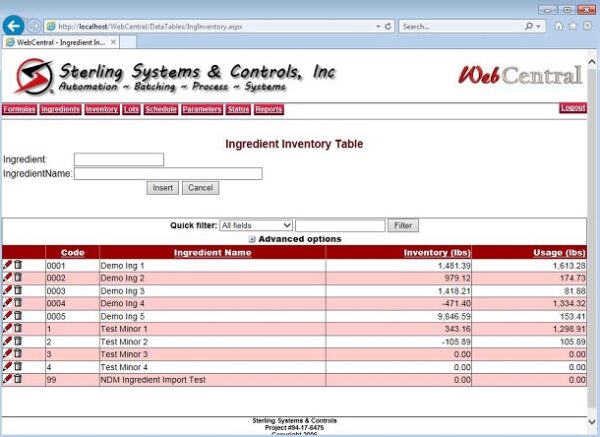
In addition, Sterling Systems & Controls WebCentral remote supervisory control software application was also provided. WebCentral is a browser-based supervisory control application that allows you to remotely access the database of a Sterling Systems control system. It allows you to do things like add or remove ingredients, create and manage recipes, manage ingredient and product inventories, set up a batching schedule, and review and print historical reports in a batching control system. Because WebCentral is browser-based, it is very simple and intuitive to use. This also means that WebCentral can be accessed by virtually any computer networked with the Sterling Systems batching or other type of control system, without having to install any software, other than a web browser.
Agricultural Seed Applications
Sterling’s automation and material handling experience applies to a wide range of seed processing tasks, including:
- Precision ingredient batching and weighing for seed coatings and treatments
- Automated formulation and sequencing of dry and liquid components
- Integration with material handling systems such as conveyors, hoppers, and elevators
- Control logic and interfaces for seed coating, blending, and additive application
- Data capture and reporting to support quality control and production traceability
- Integration with process controls and automation systems for centralized management
Sterling works with agricultural producers to tailor these solutions to facility layouts, production rates, and desired automation levels, ensuring each component works together to achieve operational goals.
Integration with Automation & Controls
Effective seed processing workflows rely on consistent coordination between equipment, controls, and material flow. Sterling integrates batching, weighing, and process sequencing with robust automation platforms to:
- Improve accuracy in ingredient measurement and additive dosing
- Reduce operator variability through repeatable controls
- Support recipe management and changeover operations
- Enable centralized control and diagnostic visibility
- Facilitate integration with existing seed processing equipment
These capabilities can be combined with upstream material handling and downstream packaging systems to support end-to-end visibility and control across seed production operations.
Design, Implementation & Support
Sterling supports projects from early application evaluation through design, testing, commissioning, and operator training. By providing controls, automation, and system integration together, Sterling helps agricultural customers improve consistency, reduce risk during implementation, and maintain performance through ongoing support.
Frequently Asked Questions
What is engineering seed automation?
Engineering seed automation refers to the use of controls, batching, and material handling systems to consistently manage ingredient measurement, mixing, and processing in seed production environments.
How can automation improve seed coating accuracy?
Automation improves seed coating accuracy by precisely batching and controlling the flow of dry and liquid additives according to programmed recipes, reducing variability and improving product consistency.
Can Sterling systems integrate with existing equipment in a seed plant?
Yes. Sterling’s automation and controls can integrate with existing conveyors, dryers, mixers, and packaging equipment to improve coordination and operational visibility.
Does seed processing automation support data tracking and reporting?
Yes. Systems can capture ingredient weights, batch execution details, and operational logs to support traceability, quality control, and production reporting.
What industries within agriculture benefit from seed automation?
Agricultural seed processors, seed treatment facilities, and bulk seed packaging operations all benefit from automation solutions that improve accuracy, throughput, and process control.