
Streamline Your Workflow: The Best Automated Dispensing Solutions
Introduction to Automated Fluid Dispensing
Automated fluid dispensing systems are machines that measure and deliver precise amounts of liquids or semi-liquids without manual intervention. These systems use pumps, valves, load cells, and controllers to dispense everything from water-thin chemicals to thick pastes.
Top automated dispensing system types:
- Volumetric systems – Dispense by volume using time-pressure, piston pumps, or auger valves
- Gravimetric systems – Measure by weight using load cells for maximum accuracy
- Positive displacement systems – Use peristaltic, gear, or progressive cavity pumps for consistent flow
If you’re still measuring ingredients by hand or dealing with inconsistent batch quality, you’re facing the core problem these systems solve. Manual dispensing leads to human error, material waste, and production bottlenecks. Every time an operator eyeballs a measurement or hand-pours a chemical, you risk off-spec batches and safety incidents.
Automated systems eliminate guesswork. They deliver the same amount every single time, whether you’re filling 10 containers or 10,000. This means fewer rejected batches, less raw material waste, and faster production cycles.
The right system depends on your fluid properties and accuracy needs. Thin liquids with tight tolerances? Gravimetric dispensing might be your answer. Thick adhesives or shear-sensitive materials? Positive displacement pumps handle those best.
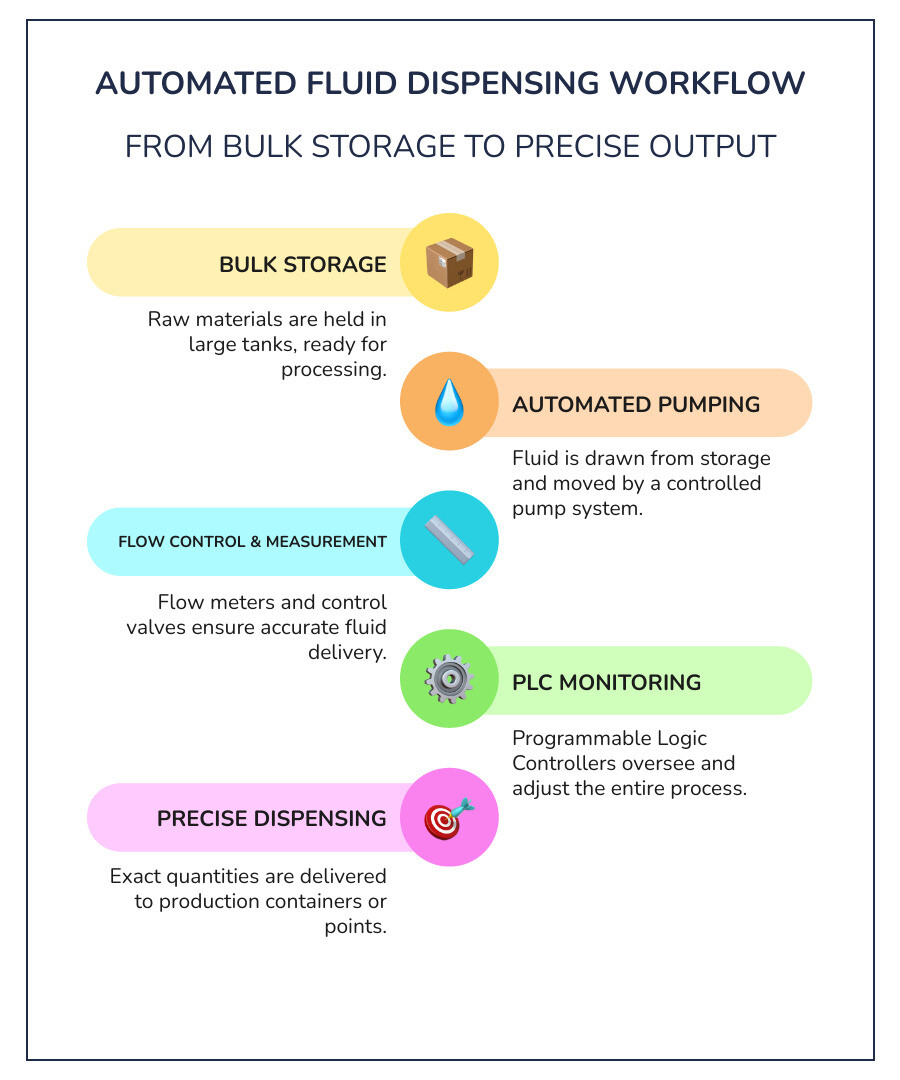
When we talk about automated fluid dispensing systems, we’re really talking about a revolution in how industries handle liquids. Gone are the days of manual pours and “close enough” measurements. Today, we have the technology to achieve unparalleled precision, consistency, and efficiency in any process involving fluids. From bulk storage to the final, precise dispense point, these systems ensure every drop counts.
The challenges of manual dispensing are numerous and often costly. Think about it: an operator might be tired, distracted, or simply less precise than a machine. This can lead to variations in product quality, inconsistent batches, and even regulatory compliance issues. Furthermore, handling certain fluids manually can pose significant safety risks, exposing personnel to hazardous materials. These are the very issues we aim to eradicate with well-designed automated fluid dispensing systems. Our goal is to transform your workflow, making it smoother, safer, and significantly more profitable.
Why Your Process Needs an Automated Dispensing Solution
Imagine a production line where every single batch is identical, where material waste is drastically reduced, and where your team can focus on higher-value tasks rather than repetitive dispensing. This isn’t a dream; it’s the reality that automated fluid dispensing systems bring to the table. We’ve seen how these solutions can dramatically improve operations across various industries.
Let’s explore the core reasons why investing in an automated dispensing solution is not just a good idea, but often a critical one for modern manufacturing:
- Improved Accuracy: At the heart of automation is precision. Our systems are designed to deliver exact quantities, eliminating the variability inherent in manual processes. This means your product formulations are consistently met, leading to higher quality and fewer rejected batches. We’re talking about dispensing accuracy that’s often measured in fractions of a gram or milliliter, far beyond what human hands can reliably achieve.
- Improved Repeatability: Consistency is king in manufacturing. Once an automated system is programmed, it will perform the same task, in the same way, every single time. This ensures that batch after batch, day after day, your product maintains its exact specifications, building trust with your customers and simplifying quality control.
- Reduced Material Waste: Inaccurate dispensing means wasted raw materials. Whether it’s over-dispensing expensive ingredients or incorrectly mixing a batch that needs to be discarded, manual errors can quickly eat into your profits. Automated systems minimize this waste by dispensing only what’s needed, with incredible accuracy. This is particularly crucial for valuable or hazardous materials, where every drop saved translates directly to cost savings and environmental responsibility.
- Increased Production Speed: Automation doesn’t just improve quality; it boosts your output. Our automated fluid dispensing systems operate at speeds that manual processes simply cannot match, consistently and without fatigue. This allows for higher throughput, shorter lead times, and the ability to meet increased demand without expanding your labor force. Think about the potential for boosting your bottom line!
- Safer Work Environment: Handling certain chemicals or fluids can be dangerous. Automated dispensing minimizes human exposure to hazardous, corrosive, or high-temperature materials, significantly enhancing workplace safety. By enclosing the dispensing process and automating the handling, we protect your most valuable asset: your people. This also reduces the risk of spills, contamination, and other incidents that can lead to costly downtime or regulatory fines.
- Labor Cost Savings: While there’s an initial investment, the long-term labor cost savings are substantial. Automation reduces the need for constant human oversight in repetitive dispensing tasks, allowing your skilled employees to be redeployed to more complex, value-added activities. This optimization of your workforce can lead to significant operational efficiencies and a healthier bottom line. For a deeper understanding of how robust process control contributes to these benefits, we often refer to insights from research in publications like the journal Control Engineering Practice, which highlight the tangible advantages of integrated automation.
By embracing automated fluid dispensing systems, you’re not just buying equipment; you’re investing in a smarter, more efficient, and safer future for your manufacturing operations. It’s about working smarter, not harder, and letting technology handle the precise, repetitive tasks so your team can innovate and grow.
Key Types of Automated Fluid Dispensing Systems
Choosing the right automated fluid dispensing system for your application is a bit like picking the perfect tool for a specific job – a wrench won’t help you hammer a nail, and a delicate syringe won’t fare well with thick tar. The “best” system isn’t universal; it’s the one that perfectly matches your fluid properties, accuracy requirements, and production goals. We work closely with our clients to understand their unique needs, ensuring they get a solution that truly fits.
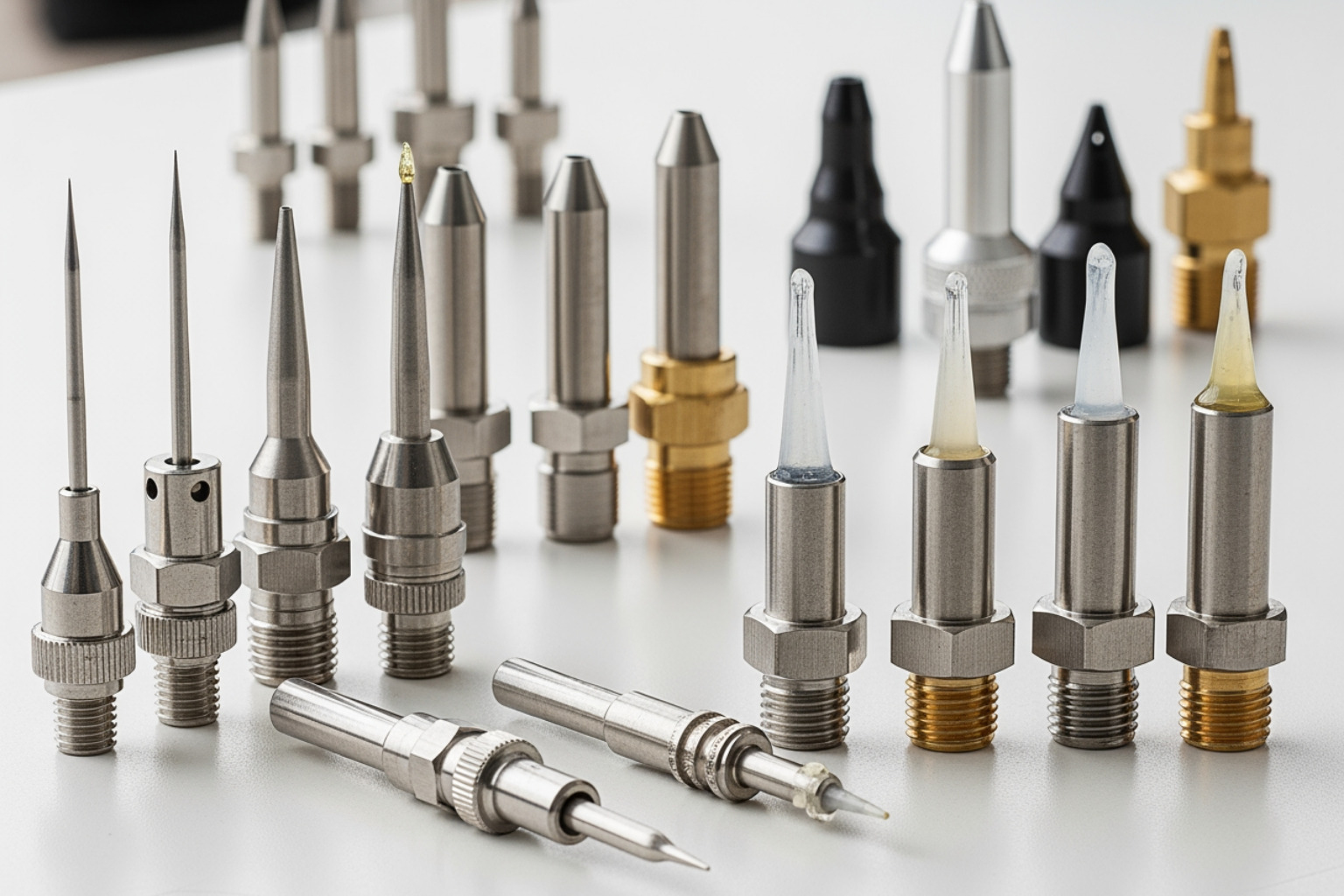
Dispensing methods vary widely, from simple timed releases to complex gravimetric measurements. Each method relies on specific system components, such as pumps, valves, controllers, and nozzles, all working in harmony to achieve the desired outcome. Let’s explore the primary types of systems you’ll encounter.
Understanding Volumetric Dispensing Technology
Volumetric dispensing systems, as their name suggests, deliver a precise volume of fluid. These systems are excellent for applications where consistent volume is the primary concern, and variations in fluid density are either negligible or accounted for. They are often chosen for their speed and cost-effectiveness in many industrial settings.
- Time-Pressure Systems: These are among the simplest volumetric dispensers. They work by applying a controlled amount of air pressure to a fluid reservoir for a set period of time. The longer the pressure is applied, the more fluid is dispensed. While straightforward, their accuracy can be influenced by changes in fluid viscosity, temperature, and even the fill level of the reservoir. They are best suited for non-critical applications or fluids with stable properties.
- Piston Pump Dispensers: These systems use a piston to draw a precise volume of fluid into a chamber and then push it out. Because the piston’s stroke length is highly controllable, they offer excellent volumetric accuracy and repeatability. Piston pumps are robust and can handle a wide range of fluid viscosities, making them a popular choice for many industrial applications. They are less affected by changes in fluid viscosity compared to time-pressure systems.
- Auger Valve Systems: Specifically designed for highly viscous fluids, pastes, and solder pastes, auger valve systems use a rotating screw (auger) to push a controlled amount of material through a nozzle. The volume dispensed is determined by the number of rotations and the auger’s pitch. These systems excel at preventing stringing and dripping, providing clean, consistent dots or lines of material.
The beauty of volumetric systems is their ability to deliver repeatable volumes efficiently. They are often a great choice when your fluid’s density is stable, and you need a consistent amount of material without necessarily needing to weigh every single dispense.
The Precision of Gravimetric Automated Fluid Dispensing Systems
When accuracy is paramount, especially with expensive or critical ingredients, gravimetric automated fluid dispensing systems are the gold standard. Instead of measuring by volume, these systems measure by weight, offering unparalleled precision because weight is a direct measure of mass and is unaffected by temperature, pressure, or minor density variations.
- Loss-in-Weight Dispensing: In a loss-in-weight system, the entire supply hopper or tank sits on a highly accurate load cell. As material is dispensed, the system continuously monitors the decrease in weight. The dispenser’s speed is then adjusted to ensure the desired dispense rate and total weight are met with exceptional accuracy. This method is ideal for continuous feeding or dispensing small, precise amounts from a bulk source.
- Gain-in-Weight Batching: For batch operations, gain-in-weight systems work by placing the receiving container (such as a drum or tote) on a load cell. The system then dispenses material into the container until the target weight is reached. This is especially effective for multi-ingredient formulations where each component needs to be added with extreme precision. The system can tare the container and then add each ingredient sequentially, ensuring the final batch weight is perfectly accurate.
The core of gravimetric systems lies in their use of sophisticated load cells, which are transducers that convert force (weight) into an electrical signal. These load cells, combined with advanced control algorithms, allow for extremely high-accuracy applications, making them ideal for valuable ingredients where even a slight deviation can be costly. For those interested in the specifics of handling liquids with this level of accuracy, we offer detailed information about our liquid batching systems that dig into the precise engineering behind these solutions. If you’re working with gold-standard ingredients or need to meet stringent regulatory requirements, gravimetric systems are often the way to go.
Exploring Positive Displacement Automated Fluid Dispensing Systems
Positive displacement pumps are a workhorse in automated fluid dispensing systems, particularly when dealing with challenging fluids. These pumps are characterized by their ability to move a fixed amount of fluid with each revolution or cycle, making them highly consistent and excellent for controlling flow rates, especially for viscous or shear-sensitive materials.
- Peristaltic Pumps: Often called “hose pumps,” peristaltic pumps work by compressing a flexible tube (hose) with rollers, pushing the fluid forward. This design means the fluid never comes into contact with any mechanical parts of the pump itself, only the tubing. This makes them ideal for sterile applications, aggressive chemicals, or highly viscous fluids that might damage other pump types. They are also excellent for shear-sensitive materials, as the gentle squeezing action minimizes stress on the fluid.
- Gear Pumps: These pumps use two rotating gears that mesh together, trapping fluid between their teeth and carrying it from the inlet to the outlet. Gear pumps are known for their ability to handle high pressures and provide a very consistent, pulsation-free flow. They are widely used for viscous fluids like oils, resins, and polymers, offering good volumetric accuracy.
- Progressive Cavity Pumps: Also known as eccentric screw pumps, these pumps consist of a helical rotor rotating eccentrically within a double-helical stator. This creates a series of sealed cavities that progress from the inlet to the outlet, carrying the fluid. Progressive cavity pumps are exceptional at handling very viscous fluids, slurries with solids, and shear-sensitive materials. They provide a smooth, low-pulsation flow, making them suitable for precise dispensing of challenging media.
These positive displacement systems are often the heroes of dispensing when fluids are thick, sticky, or delicate. They ensure that even the most stubborn or fragile materials are dispensed accurately and consistently, without degradation or mess.
How to Choose the Right System for Your Application
Navigating the landscape of automated fluid dispensing systems can feel a bit like trying to pick out a single star in a galaxy. With so many options, how do you pinpoint the perfect fit for your specific needs? We believe the key lies in a thorough understanding of your fluid, your process, and your desired outcome. It’s not just about what the system can do, but what it should do for you.
Here’s a quick comparison to help frame your decision-making process:
| Feature | Volumetric Dispensing | Gravimetric Dispensing |
|---|---|---|
| Accuracy | Good to very good (dependent on fluid stability) | Excellent (unaffected by density changes) |
| Speed | Generally faster for simpler dispenses | Can be slower due to precise weighing, but highly accurate |
| Cost | Often lower initial investment | Higher initial investment due to load cells and controls |
| Fluid Comp. | Wide range, but accuracy can be affected by viscosity | Wide range, excellent for valuable/critical ingredients |
| Primary Metric | Volume (mL, L) | Weight (g, kg) |
Critical Factors to Consider:
FLUID PROPERTIES: This is perhaps the most crucial starting point.
- Viscosity: Is your fluid water-thin, like a solvent, or thick and gooey, like an adhesive or paste? Low viscosity fluids often work well with time-pressure or piston pumps, while high viscosity materials might demand auger valves or positive displacement pumps.
- Abrasiveness: Does your fluid contain solid particles that could wear down pump components? If so, you’ll need systems with robust, wear-resistant materials or designs that minimize friction, like peristaltic pumps.
- Corrosiveness: Is your fluid acidic, alkaline, or otherwise chemically aggressive? Material compatibility is vital here. We ensure all wetted parts of the system are constructed from resistant materials like stainless steel, PTFE, or specific plastics to prevent degradation and contamination.
- Shear Sensitivity: Some fluids, like certain emulsions or biological materials, can be damaged or have their properties altered by excessive shear forces. Positive displacement pumps, particularly peristaltic or progressive cavity types, are often preferred for their gentle handling.
- Temperature: Does the fluid need to be heated or cooled to maintain its optimal viscosity or stability during dispensing? We can integrate heated hoppers, jackets, or temperature control systems.
REQUIRED DISPENSE VOLUME: Are you dispensing micro-liters for electronics, milliliters for pharmaceuticals, or liters for industrial chemicals? The scale of your dispense directly impacts the type and size of the pump and valve needed.
ACCURACY TOLERANCE: How precise does your dispense need to be? If a +/- 5% deviation is acceptable, a simpler volumetric system might suffice. If you need +/- 0.1% or better, especially for expensive ingredients or critical formulations, a gravimetric system is likely indispensable.
THROUGHPUT REQUIREMENTS: How many dispenses per minute or hour do you need to achieve? This determines the speed and automation level of the system. High-throughput lines may require multiple dispensing heads or continuous dispensing capabilities.
INTEGRATION WITH EXISTING SYSTEMS: How will the new dispensing system fit into your current production line? Seamless integration with your existing PLCs, SCADA systems, and material handling equipment is essential for a truly automated workflow. This is where our expertise in process controls integration becomes invaluable, ensuring your new system talks to your old systems without a hitch.
By carefully evaluating these factors, we can guide you toward an automated fluid dispensing system that not only meets your current needs but also provides the flexibility for future growth and optimization. It’s about making an informed decision that pays dividends for years to come.
Frequently Asked Questions
We understand that stepping into automated fluid dispensing systems can bring a lot of questions. It’s a significant investment and a crucial component of your production process. Here, we tackle some of the most common inquiries we receive, sharing our expert insights to help you feel more confident about automation.
What industries use automated fluid dispensing?
It might be easier to list industries that don’t use automated fluid dispensing, but even then, we’d probably find an exception! These systems are incredibly versatile and have become indispensable across a vast array of sectors where precision, consistency, and efficiency in fluid handling are paramount. In North America, we see them in:
- Food and Beverage: Think about filling bottles with sauces, mixing ingredients for baked goods, or accurately dispensing flavorings into beverages. From high-speed bottle filling to precise ingredient batching, automation ensures product consistency and safety.
- Chemical Manufacturing: This industry relies heavily on precise mixing and dispensing of various chemicals, often hazardous ones. Automated systems provide the accuracy needed for complex formulations and protect workers from exposure.
- Pharmaceutical: In pharmaceuticals, accuracy isn’t just about quality; it’s about patient safety and regulatory compliance. Automated systems are used for everything from filling vials with precise drug dosages to creating consistent medical compounds.
- Adhesives and Sealants: Whether it’s applying a thin bead of adhesive in an assembly line or dispensing a sealant for weatherproofing, automation ensures uniform application, preventing waste and improving product integrity.
- Electronics Assembly: For delicate tasks like applying solder paste, encapsulating components, or bonding intricate parts, micro-dispensing systems offer the precision required for modern electronics.
- Automotive Production: From applying lubricants and coolants to dispensing structural adhesives and paints, automated fluid dispensing systems are integral to the efficiency and quality of automotive manufacturing processes.
Essentially, if your process involves moving or mixing a liquid or semi-liquid with any degree of accuracy or volume control, there’s a strong case for automation.
Can these systems handle aggressive or thick fluids?
Absolutely, yes! This is a question we hear often, and it’s a critical one. Many industrial processes involve fluids that are either very thick (high viscosity), corrosive, abrasive, or shear-sensitive. The good news is that modern automated fluid dispensing systems are designed with these challenges in mind.
The key lies in:
- Material Compatibility: We select construction materials for pumps, valves, tubing, and nozzles that are specifically resistant to the chemicals being handled. This could mean using specialized alloys, ceramics, or advanced polymers (like PTFE or PEEK) to prevent corrosion, degradation, or contamination.
- Pump Selection: As we discussed earlier, certain pump types are inherently better suited for challenging fluids. Positive displacement pumps (peristaltic, gear, progressive cavity) excel with viscous and shear-sensitive materials. Diaphragm pumps might be chosen for aggressive chemicals.
- Custom Engineering: Sometimes, off-the-shelf solutions aren’t enough. We specialize in custom engineering to meet unique fluid challenges. This can involve:
- Heated Hoppers and Lines: To reduce the viscosity of thick fluids, making them easier to pump and dispense accurately.
- Agitators for Viscosity Control: For fluids that settle or change viscosity over time, agitators ensure homogeneity before dispensing.
- Specialized Nozzles and Valves: Designed to handle high-pressure, abrasive, or extremely thick materials without clogging or premature wear.
So, whether you’re working with molten chocolate, strong acids, abrasive slurries, or delicate biological reagents, rest assured that there’s an automated solution capable of handling your specific fluid with precision and reliability.
How is an automated system integrated into a production line?
Integrating a new automated fluid dispensing system into an existing production line is a crucial step, and it’s where our expertise in holistic solutions truly shines. We understand that a new system needs to work seamlessly with your current operations, not create new bottlenecks.
The integration process typically involves several key components:
- PLC Integration: Programmable Logic Controllers (PLCs) are the brains of most industrial automation systems. Our dispensing systems are designed to communicate directly with your existing plant PLCs, allowing for centralized control, data exchange, and synchronized operations. This means your dispensing process can be triggered, monitored, and adjusted from your main control room.
- SCADA Systems: Supervisory Control and Data Acquisition (SCADA) systems provide a higher-level overview, allowing operators to monitor and control the entire production line, including the dispensing process, from a human-machine interface (HMI). We ensure our systems can feed data into your SCADA for real-time performance tracking, historical data logging, and alarm management.
- Custom Programming: Every production line has its unique rhythm and requirements. We provide custom programming to tailor the dispensing system’s logic to your specific workflow. This could involve complex sequencing, recipe management, error handling, and communication protocols specific to your facility.
- Conveyor Synchronization: For lines involving continuous product movement, our dispensing systems can be synchronized with conveyor belts or robotic arms to ensure precise dispensing onto moving targets. This involves vision systems, encoders, and advanced motion control to maintain accuracy at high speeds.
- Turnkey Solutions: Our approach is to offer comprehensive custom automation engineering and turnkey solutions. This means we don’t just supply the equipment; we design the entire system, manage its installation, program the controls, and provide training. We ensure that from concept to commissioning, your new automated dispensing system is fully integrated and operational, ready to improve your production from day one.
Our goal is to make the integration process as smooth and disruption-free as possible, ensuring your new system improves your production efficiency without unnecessary complications.
Conclusion: Achieve Best Precision with a Custom Solution
As we’ve explored, automated fluid dispensing systems are far more than just machines that squirt liquid. They are sophisticated tools that bring unparalleled precision, consistency, and efficiency to virtually any manufacturing process. We’ve seen how they reduce material waste, increase production speed, create safer work environments, and deliver significant labor cost savings. From volumetric and gravimetric systems to the robust positive displacement pumps, there’s a solution custom-made for every fluid and every application.
The journey to optimal fluid dispensing is rarely a one-size-fits-all path. Your fluids are unique, your processes have their quirks, and your production goals are specific to your business. This is precisely why the importance of a custom approach cannot be overstated. Off-the-shelf solutions might get you part of the way, but a truly optimized system is one that’s engineered from the ground up to meet your exact specifications.
This is where Sterling Systems & Controls stands apart. We pride ourselves on offering single-source, experienced solutions that are custom-engineered to your client objectives. We don’t just sell equipment; we integrate diverse process equipment into a cohesive, intelligent system that works seamlessly within your facility. Our expertise in material weighing, batching, and process control allows us to design and implement automated fluid dispensing systems that aren’t just efficient, but also robust, reliable, and ready for the future.
The future of dispensing is intelligent, adaptive, and increasingly integrated. As technology continues to evolve, so too will the capabilities of these systems, offering even greater levels of control, data analytics, and predictive maintenance. By partnering with us, you’re not just adopting current best practices; you’re investing in a system that’s designed to grow with your business and keep you at the forefront of your industry.
Ready to transform your fluid handling operations and achieve new levels of precision and efficiency? Don’t settle for “good enough” when “perfect” is within reach. Request a quote for your process automation solution today, and let us help you design an automated fluid dispensing system that truly streamlines your workflow.
Last updated on April 1st, 2026 at 11:32 am