
A Guide to Choosing the Right Pellet Mill
Master pellet mill operations: Boost performance, cut errors & scrap with automation, batching accuracy, and upgrade comparisons for max throughput. This guide covers how pellet mills work, what separates high-performing systems from problem-prone ones, and how automation and batching controls directly improve output quality, reduce waste, and lower labor costs.
What Is a Pellet Mill and Why It Matters for Plant Performance
A pellet mill is a machine that compresses powdered or granular raw materials through a die to form dense, uniform pellets. It’s used across animal feed, biomass fuel, and specialty chemical production.
Quick answer: What is a pellet mill?
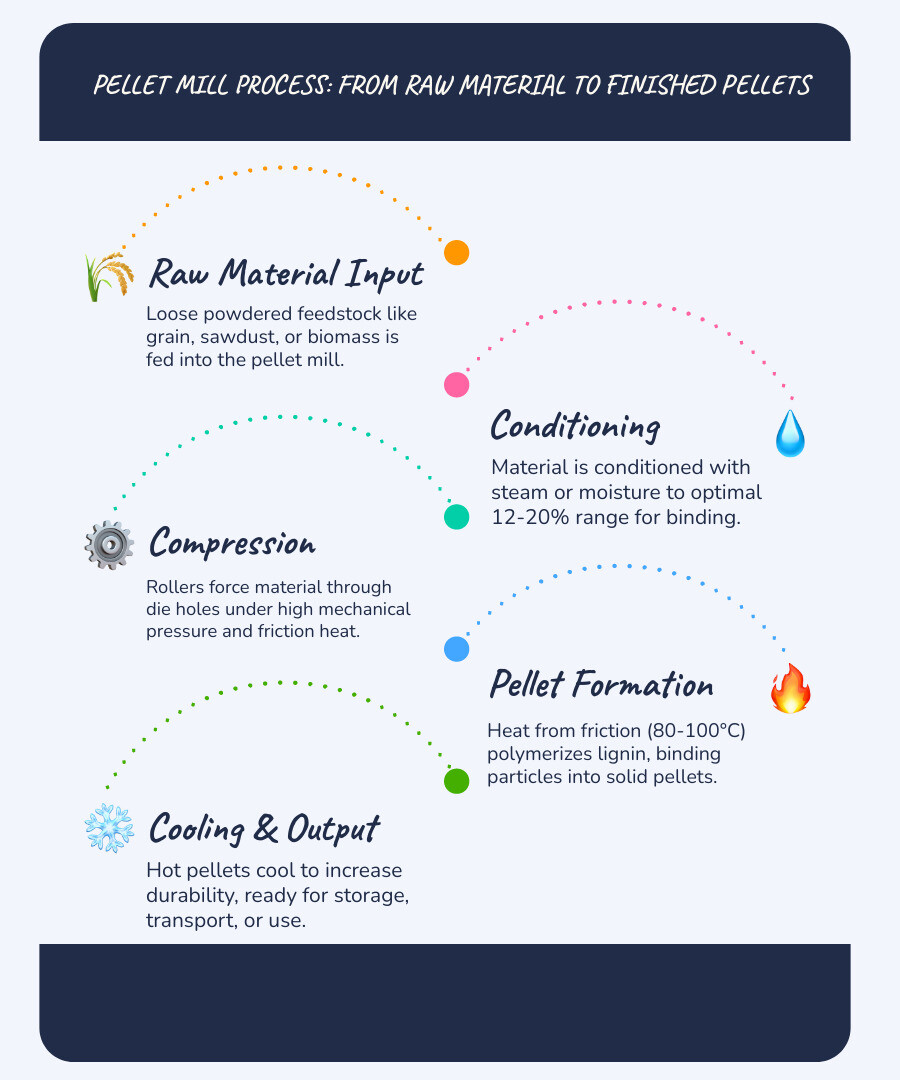
- Takes loose, powdered feedstock (grain, sawdust, biomass, etc.)
- Forces material through a metal die using rollers under high pressure
- Heat from friction binds particles together into solid pellets
- Output: uniform, dense pellets ready for storage, transport, or use
- Two main types: flat die (small scale) and ring die (industrial scale)
For production managers, the machine itself is only part of the story. The bigger challenge is consistency. Pellet mills are sensitive to moisture levels, particle size, and feed rate. Small variations in any of these cause quality problems, scrap, and unplanned downtime.
That’s where most operations struggle. A mill running without precise controls is a mill running on guesswork.
This guide covers how pellet mills work, what separates high-performing systems from problem-prone ones, and how automation and batching controls directly improve output quality, reduce waste, and lower labor costs.
How a Pellet Mill Works: Mechanics and Types
To understand how to optimize your production, we first need to look under the hood. At its core, a pellet mill is a density-increasing machine. It doesn’t grind material down; it builds it up into a manageable, homogeneous mass.
The process relies on three critical mechanical factors:
- Mechanical Pressure: Rollers force the raw material into the holes of a die.
- Heat Friction: As the material is squeezed through the die, the friction generates significant heat.
- Material Polymerization: This heat, combined with pressure and moisture, causes natural binders in the material (like lignin in wood or starches in grain) to soften and fuse, literally “glueing” the pellet together.
The Component Breakdown
The typical assembly includes a feeder (which controls the flow of material), a conditioning chamber (where moisture or steam is added), and the pelleting head. Inside the head, you’ll find the die and the roller assembly. As the die or the rollers rotate, the material is compressed and extruded. Once the “strings” of material emerge from the other side of the die, adjustable knives cut them to the desired length.
Flat Die vs. Ring Die: A Quick Comparison
Choosing the right machine depends entirely on your volume and material type.
| Feature | Flat Die Pellet Mill | Ring Die Pellet Mill |
|---|---|---|
| Primary Use | Home/Small-scale, lab testing | Industrial, 24/7 production |
| Throughput | Low to Moderate | High to Very High |
| Durability | Moderate (higher wear on parts) | High (designed for longevity) |
| Control Integration | Often manual or basic | Highly automated |
| Material Type | Best for animal feed, soft biomass | Wood, heavy biomass, large-scale feed |
Flat Die Pellet Mill for Small Scale Use
In my years of working with various process industries, I’ve seen the flat die pellet mill become the go-to for small-scale farmers and hobbyists. In these models, a flat, horizontal die sits below a set of rollers.
These machines are prized for their portability and simplicity. They are excellent for low-volume biomass processing or creating custom animal feed mixes on-site. You can find them in manual crank versions or electric models. However, their main limitation is their inability to handle the heavy-duty, continuous loads required by industrial plants. They also lack the sophisticated sensors needed for advanced automation integration, making them a “hands-on” machine that requires constant operator attention.
Ring Die Pellet Mill for Industrial Production
When we talk about serious throughput, we are talking about the ring die pellet mill. In this design, the die is a vertical cylinder (a ring), and the rollers are positioned inside.
These are the workhorses of the industry. They are designed for 24-hour operation under tough conditions. High-end industrial models often utilize a positive direct gear drive, which can achieve up to 98% power transfer efficiency compared to belt-driven models. This efficiency is vital when you are processing tons of material per hour.
Because these machines are part of a larger ecosystem, they require sophisticated pellet mill control systems to manage feed rates and prevent motor overloads.
Critical Factors for Pellet Quality and Consistency
A common frustration I hear from plant managers is that their pellets are either too crumbly (leading to “fines” or dust) or the machine keeps plugging up. Achieving the perfect pellet is a balancing act of several variables.
Moisture Control: The “Goldilocks” Zone
Moisture is the most critical variable. For most biomass and feed, the raw material needs to be between 12% and 20% moisture.
- Too dry: The material won’t bind, and you’ll end up with a pile of hot dust.
- Too wet: The material becomes a paste that gums up the die, leading to hours of painful cleaning.
Particle Size and Conditioning
You can’t put a whole corn cob into a pellet mill and expect a pellet. The material must first pass through a hammer mill to reach a uniform particle size, usually smaller than the diameter of the die holes.
Conditioning is the next step. By injecting steam into the material before it hits the die, you pre-gelatinize starches and soften fibers. This not only makes the pellet more durable but also reduces wear on the die. Proper conditioning is also a major factor in enhancing animal health through the pelleting process, as it can eliminate harmful bacteria and improve digestibility.
Overcoming Operational Pain Points with Automation
If you are still relying on an operator to manually adjust the feeder speed based on the “sound” of the mill, you are losing money. Manual operation is the primary source of scrap and inconsistent throughput.
By implementing pellet mill control and feed mill automation, you solve several early-stage problems:
- Reduced Batching Errors: Automation ensures the exact recipe is followed every time.
- Lower Labor Dependency: One operator can oversee multiple lines when the system handles the minute-by-minute adjustments.
- Increased Throughput: An automated system can run the mill at its “sweet spot”—just below the point of plugging—maximizing output without risking downtime.
Manual vs Automated Batching
I often see plants where ingredients are hand-scooped into a mixer before heading to the pellet mill. This is a recipe for disaster. Human error in batching leads to pellets that don’t meet nutritional or structural specs.
Automated batching systems eliminate the “oops” factor. They provide real-time data on exactly how much of each ingredient was used, which is vital for regulatory compliance and cost tracking. Moving from manual to automated batching is often the single biggest leap a plant can make in terms of ROI.
Loss-in-Weight vs Gain-in-Weight Systems
When designing a batching system, you have to choose your weighing technology.
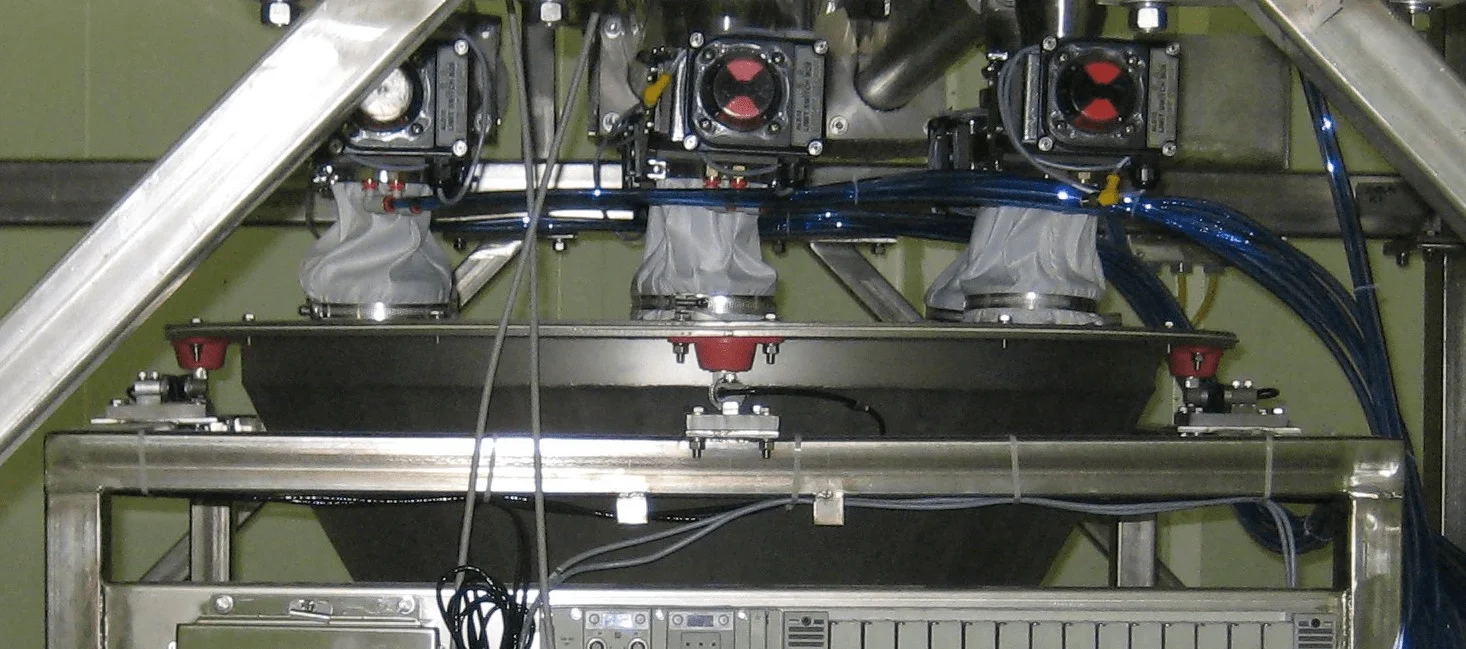
- Gain-in-Weight (GIW): The scale starts at zero and ingredients are added one by one. This is cost-effective and great for large batches.
- Loss-in-Weight (LIW): The entire supply hopper is on scales, and the system measures how much material leaves the hopper. This is the gold standard for micro-ingredients and continuous feeding where extreme accuracy is required.
Choosing the right one depends on your material characteristics and how much a 1% error in a specific ingredient might cost you in finished product quality.
Choosing the Right Power Source and Capacity
As of May 2026, energy costs are a top-tier concern for every plant I visit in the United States and Canada. Your choice of power source dictates your operating costs and mobility.
- Electric (Single Phase vs. Three Phase):
- 220V Single Phase (1ph) is common for residential or small farm use. It’s convenient but limits you to smaller motors (typically under 10hp).
- 220V or 460V Three Phase (3ph) is the industrial standard. It provides the torque needed for high-capacity mills. Electric mills generally produce about 20 lbs of pellets per horsepower per hour.
- PTO (Power Take-Off):
- Ideal for farmers who already own a tractor. It uses the tractor’s engine to turn the mill. It’s mobile and powerful but ties up a piece of expensive equipment.
- Diesel/Gasoline:
- Best for remote locations where electricity isn’t available. Production rates are slightly lower here, around 13 lbs per horsepower per hour, due to efficiency losses in internal combustion engines.
Retrofit Versus Full System Upgrade
You don’t always need to buy a brand-new pellet mill to get modern results. Many of the operational headaches people face can be solved by a pellet mill control and automation retrofit.
Evaluating Your Infrastructure
If your mechanical components (the die, the main shaft, the housing) are still in good shape, a control system upgrade is the most cost-effective way to increase performance. This involves adding sensors to monitor motor load, temperature, and moisture, and then tying them into a centralized PLC (Programmable Logic Controller).
The Benefits of a Retrofit
- Minimize Downtime: Installation can often be done in stages.
- Lower Capital Expenditure: You get the benefits of a “smart” mill at a fraction of the cost of a new machine.
- Future-Proofing: Modern controls allow you to integrate your mill into a plant-wide data system, making it easier to track efficiency and plan maintenance.
Frequently Asked Questions
What is the ideal moisture content for raw materials?
For most materials, the “sweet spot” is between 12% and 15%. If you are using sawdust, you might need to be on the lower end (10-15%), while agricultural waste like straw might require up to 18-20%. Anything outside these ranges usually leads to poor pellet quality or a plugged mill.
Can I use a feed pellet mill for wood pellets?
Generally, yes, but with a caveat. Wood is much more abrasive and harder to compress than animal feed. A mill designed specifically for wood will have a heavier-duty gearbox and specialized dies. If you use a feed mill for wood, expect a lower production rate and much faster wear on your parts.
How do I prevent the die from gumming up?
Consistency is key. Use pelleting feed mill automation to maintain a steady feed rate and moisture level. Also, never stop a mill while it’s full of “hot” material. Most operators “flush” the mill with an oily mixture (like bran and vegetable oil) before shutting down to ensure the material in the die doesn’t harden like concrete overnight.
Conclusion
The journey from loose powder to a perfect, high-density pellet is full of mechanical and chemical hurdles. Whether you are operating in Sterling, Illinois, or anywhere across Canada, the goal remains the same: maximizing throughput while minimizing waste.
At Sterling Systems & Controls, I specialize in providing the “brains” for your operation. We focus on custom-engineered automated solutions that take the guesswork out of the pellet mill process. By integrating precision weighing, automated batching, and real-time process control, we help our clients achieve:
- Reduced batching errors and scrap
- Increased throughput and consistency
- Lower labor dependency
If your current setup feels more like a “survival” situation than a streamlined production line, it might be time to look at how pelleting automation applications can transform your plant performance. Don’t let manual errors and inconsistent quality hold your business back—let’s automate for a more profitable future.
Last updated on June 9th, 2026 at 03:39 pm